 By
By 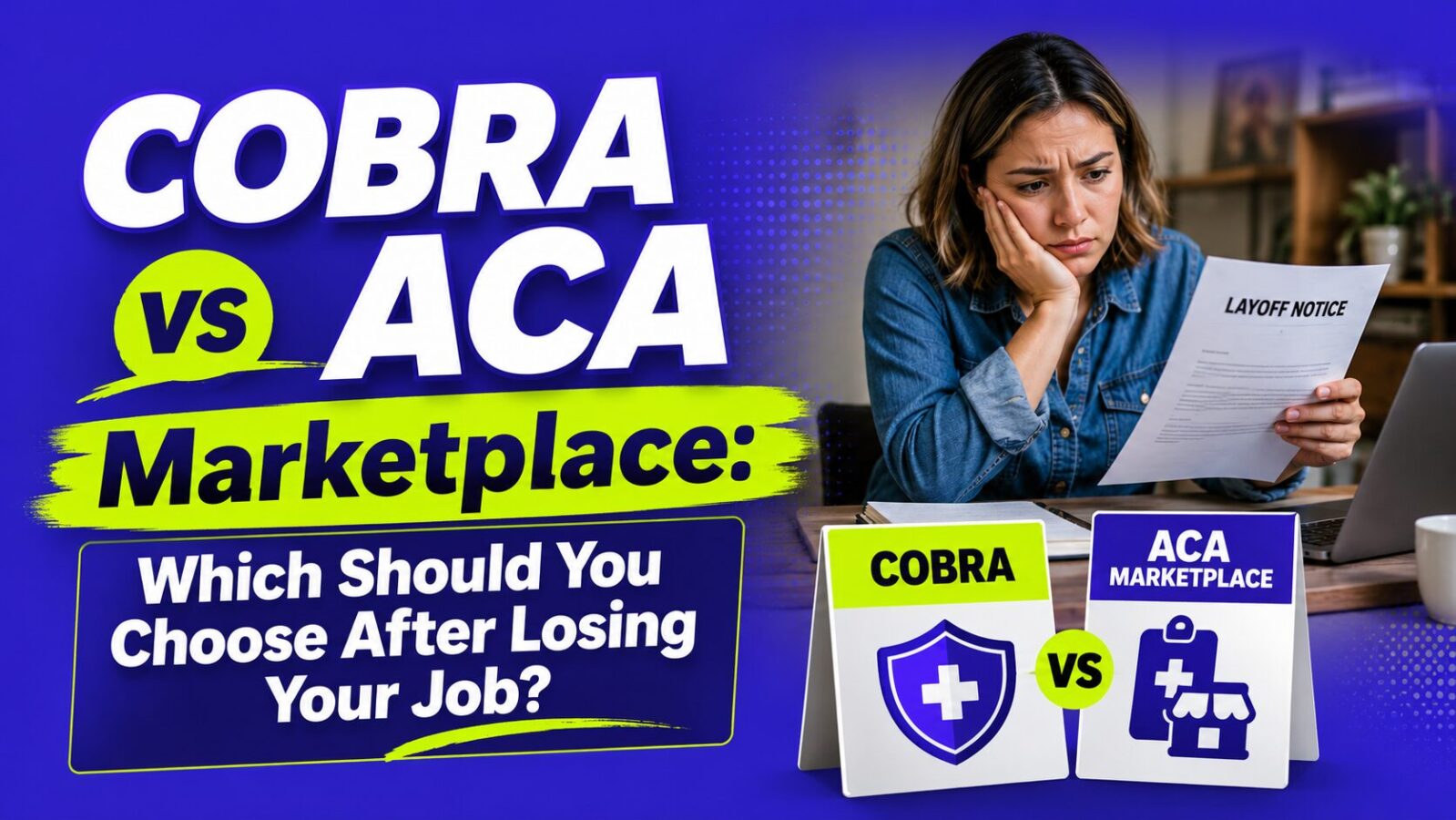
COBRA lets you keep your exact employer plan after losing your job, but you pay the full premium yourself, often $700-$900 a month for individuals and up to $2,400 for families in 2026. An ACA marketplace plan is usually cheaper, especially with subsidies, but means switching to a different plan and possibly a different network. For most people losing a job, the marketplace is worth comparing seriously before defaulting to COBRA.
KEY TAKEAWAYS
- COBRA costs the full group premium plus up to a 2% admin fee, since your employer no longer subsidizes any part of it, typically $700-$900/month for individuals in 2026.
- Losing job-based coverage qualifies you for a Special Enrollment Period on the ACA marketplace, so you’re not stuck waiting for the next open enrollment window.
- ACA marketplace subsidies can make premiums far cheaper than COBRA for many households, especially at lower and moderate income levels.
- COBRA keeps your exact same plan and network, which matters if you’re mid-treatment or have a provider relationship you don’t want to disrupt.
- COBRA generally lasts up to 18 months for job loss, extendable to 29 months with a disability determination, or up to 36 months for certain other qualifying events.
What Exactly Is COBRA?
COBRA (the Consolidated Omnibus Budget Reconciliation Act) lets you temporarily continue your exact employer-sponsored health plan after leaving a job, but you now pay the full premium, including the portion your employer used to cover, plus an administrative fee of up to 2%. This is why COBRA tends to be expensive: you’re paying the true, unsubsidized cost of an employer group plan, which is often significantly more than what came out of your paycheck while employed.
How Does the ACA Marketplace Compare?
Losing job-based coverage triggers a Special Enrollment Period, giving you 60 days to enroll in an ACA marketplace plan outside the standard annual open enrollment window. Unlike COBRA, marketplace plans are priced based on your household income and location, and many people qualify for subsidies that substantially lower the effective premium, sometimes to less than what COBRA would cost for objectively worse coverage in dollar terms. See our special enrollment period guide for how these qualifying-event windows work more broadly.
How Much Does COBRA Actually Cost?
Individual COBRA premiums commonly run $700-$900 a month in 2026, and up to $2,400 a month for family coverage, though this varies significantly by state and your former employer’s specific plan, ranging from roughly $307 in lower-cost states to well over $1,000 in others. Because you’re covering the full group premium plus the admin fee, COBRA is rarely the cheapest option, its main advantage is keeping your identical plan and provider network without any disruption.
When Does COBRA Make More Sense Than the Marketplace?
- You’re mid-treatment with a specific provider or specialist and switching plans or networks would disrupt ongoing care.
- Your income makes you ineligible for meaningful ACA subsidies, in which case the marketplace’s price advantage shrinks or disappears.
- You expect a new job with benefits very soon and just need a short, simple bridge without comparing plans.
When Does the Marketplace Usually Make More Sense?
- Your household income qualifies you for meaningful subsidies, which can make marketplace premiums considerably cheaper than COBRA’s full unsubsidized cost.
- You don’t have an ongoing treatment relationship that requires staying in your exact former network.
- You want to compare plan types, HMO, PPO, HDHP, and choose one that better fits your situation going forward, rather than being locked into your former employer’s specific plan design.
How Long Does Each Option Last?
COBRA generally lasts up to 18 months for job loss or reduced hours, extendable to 29 months with a Social Security disability determination (though at a higher premium, up to 150% of cost, during the extension), or up to 36 months for certain events like divorce or a dependent aging off a parent’s plan. ACA marketplace coverage, once enrolled, continues as long as you keep paying premiums and can be renewed or changed each year during open enrollment.
Can You Switch From COBRA to the Marketplace Later?
Yes, losing job-based coverage (including COBRA ending) is itself a qualifying event for a new Special Enrollment Period, so you’re not locked into COBRA for its full duration if a better marketplace option becomes available or your COBRA coverage runs out. Many people start on COBRA short-term and transition to a marketplace plan once they’ve had time to properly compare options.
FAQ
Is COBRA or ACA marketplace coverage cheaper after losing a job?
The marketplace is often cheaper, especially with income-based subsidies, since COBRA requires paying the full unsubsidized group premium plus an admin fee.
How long do I have to enroll in a marketplace plan after losing job coverage?
60 days from the date you lose coverage, under the Special Enrollment Period rules triggered by a qualifying life event.
How long does COBRA coverage last?
Generally up to 18 months for job loss, extendable to 29 months with a disability determination, or up to 36 months for certain other qualifying events like divorce.
Can I switch from COBRA to an ACA marketplace plan later?
Yes, losing COBRA coverage is itself a qualifying event that opens a new Special Enrollment Period on the marketplace.
Bottom Line
COBRA keeps your exact plan and network but usually costs significantly more since you’re paying the full group premium, while the ACA marketplace is often cheaper, especially with subsidies, but means switching plans. Compare actual marketplace quotes against your COBRA cost before defaulting to either option.
A quick note: COBRA rules, marketplace subsidy amounts, and premium costs can vary by state and change year to year, confirm your specific numbers directly through your former employer’s COBRA administrator and Healthcare.gov before deciding.