By
By 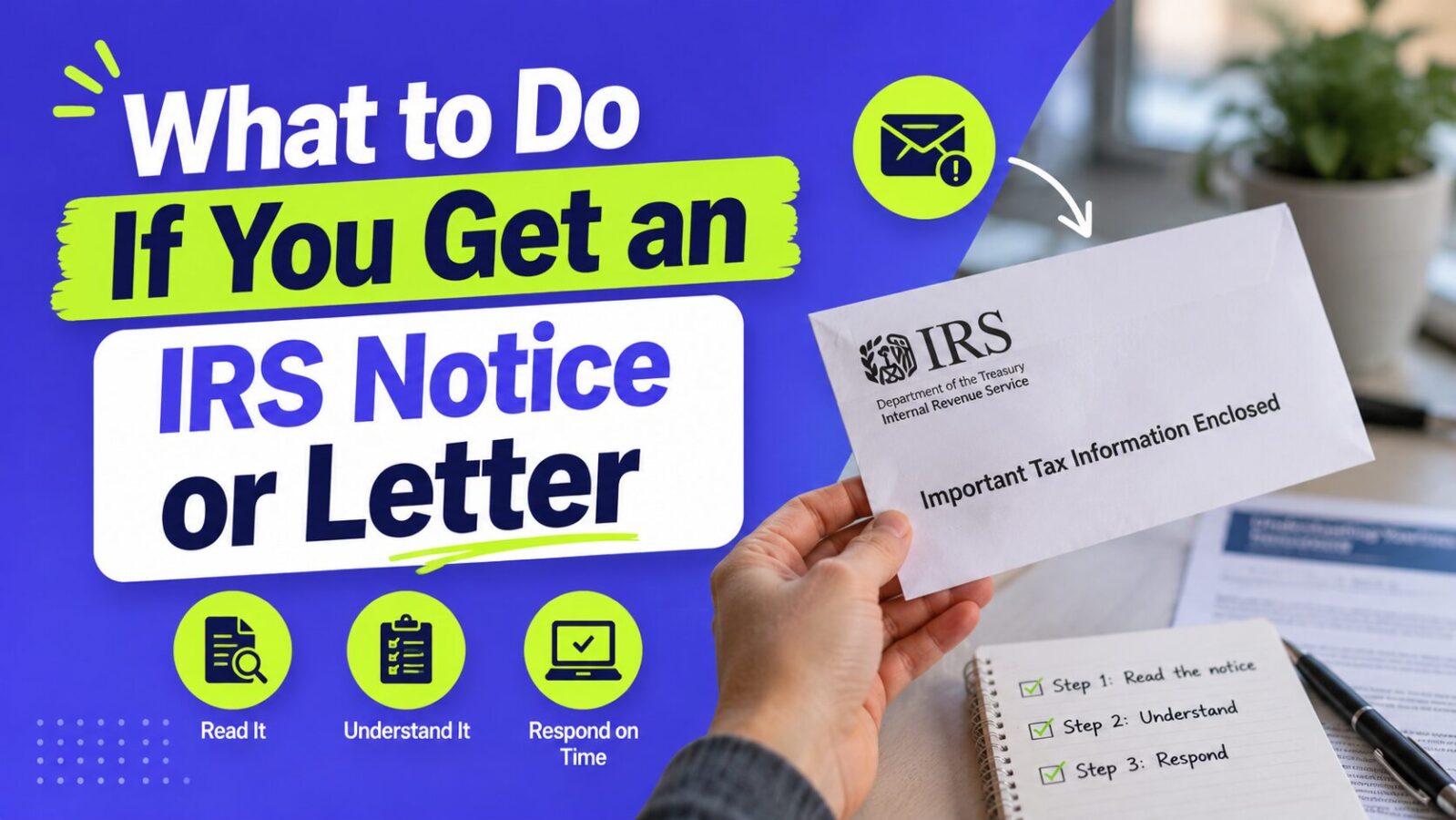
An IRS notice, like the common CP2000, is not an audit and not automatically a bill, it is the IRS flagging a mismatch between what you reported and what an employer, bank, or other third party reported to them. You have the right to agree, disagree, or partially agree, and you generally have 30 days from the notice date to respond.
KEY TAKEAWAYS
- A CP2000 is generated automatically when the IRS’s matching system spots a difference between your return and third-party reports (like a W-2, 1099, or brokerage statement).
- It is a proposed change, not a final bill and not an audit. You can agree, disagree, or partially agree with what it says.
- You typically have 30 days from the notice date to respond, and the notice includes interest calculated from your original filing deadline.
- Ignoring it is the worst option. If you don’t respond, the IRS can finalize the proposed changes and start collection on the assessed amount.
- Other common notices (CP14, CP501, CP503) generally relate to a balance already assessed, which is different from CP2000’s “proposed change” nature.
What Is a CP2000 Notice, Exactly?
The IRS runs an automated system, called the Automated Underreporter (AUR) program, that compares the income, payments, and credits on your filed return against the forms third parties sent the IRS directly, W-2s from employers, 1099s from banks or clients, and brokerage statements, among others. When something doesn’t match, like a 1099 for freelance income you forgot to include, the system generates a CP2000 proposing an adjustment.
This is not a random audit selection. It is a mechanical comparison, which is why CP2000 notices are common and don’t necessarily mean anything is wrong with the rest of your return, only the specific item flagged.
What Should You Do When You Get One?
- Read it carefully before reacting. The notice lists exactly which item doesn’t match and shows the proposed change to your tax, penalties, and interest.
- Compare it against your own records. Pull the return in question and check whether the third-party form the IRS is citing was actually left off, or whether you have it but reported it differently (which can happen with brokerage statements especially).
- Decide whether you agree, disagree, or partially agree. The response form included with the notice has a section for each option.
- Respond within 30 days of the notice date, even if you need more time to gather documents, contacting the IRS to request a short extension is far better than missing the window entirely.
- Keep copies of everything you send, and consider mailing with tracking or using the response method the notice specifically instructs.
What If You Agree With the Notice?
Sign and return the response form, and pay the amount due if you can, or set up an IRS payment plan if you can’t pay in full right away. If you agreeing means your original return needs correcting beyond what the notice covers, you may separately need to file Form 1040-X, though often the CP2000 process itself handles the correction without a separate amendment.
What If You Disagree With the Notice?
Respond with a written explanation and supporting documentation, like a corrected 1099, proof the income was reported elsewhere on your return, or proof it belongs to someone else entirely (a common issue with identity mix-ups or a shared account). The more specific and documented your explanation, the faster and more smoothly the IRS can resolve the discrepancy.
How Is a CP2000 Different From an Audit?
An audit is a broader review of your return, potentially covering multiple items, with an assigned examiner and a more involved process. A CP2000 is narrower and automated, targeting one specific mismatch identified by computer matching, not a human decision to scrutinize your full return. Most CP2000 cases resolve through mail correspondence alone and never turn into a full audit.
Other Common IRS Notices You Might Receive
| Notice | What it means |
|---|---|
| CP2000 | Proposed change due to a mismatch with third-party reporting |
| CP14 | You have a balance due on a return already filed |
| CP501 / CP503 | Reminder notices that a previously assessed balance is still unpaid |
| CP12 | The IRS corrected a calculation error and adjusted your refund |
Whatever the specific notice, the IRS’s own Taxpayer Advocate Service notice library lets you look up exactly what a specific notice number means and what response it expects.
Is It Ever a Scam Instead of a Real Notice?
Real IRS notices arrive by mail, not by text, email, or a phone call demanding immediate payment by gift card or wire transfer. If you receive a suspicious message claiming to be the IRS through any of those channels, it is very likely a scam. Genuine notices include a notice number (like CP2000) in the top corner, which you can verify directly against the IRS’s own notice library.
FAQ
Is a CP2000 notice the same as an audit?
No. It’s an automated proposed adjustment based on a mismatch with third-party reporting, not a full examination of your return. Most cases resolve by mail without becoming an audit.
How long do I have to respond to a CP2000?
Generally 30 days from the date on the notice. Contact the IRS if you need more time rather than letting the deadline pass silently.
What happens if I ignore an IRS notice?
The IRS can finalize the proposed changes and begin collection on the assessed amount, which is worse than responding, even if your response is simply asking for more time.
Does the IRS ever contact you by phone or email first?
No. The IRS initiates contact by mail. Any unexpected call, text, or email demanding immediate payment is very likely a scam.
Bottom Line
An IRS notice like a CP2000 is a solvable, routine mismatch, not an automatic bill or an audit, and responding within the 30-day window with clear documentation is almost always straightforward. The only real mistake is ignoring it and letting the proposed changes become final by default.
A quick note: notice types and specific rules can vary, so this guide is a general starting point, not advice on your specific notice. If the amount involved is large or the notice is confusing, a CPA or enrolled agent can review it with you before you respond.