 By
By 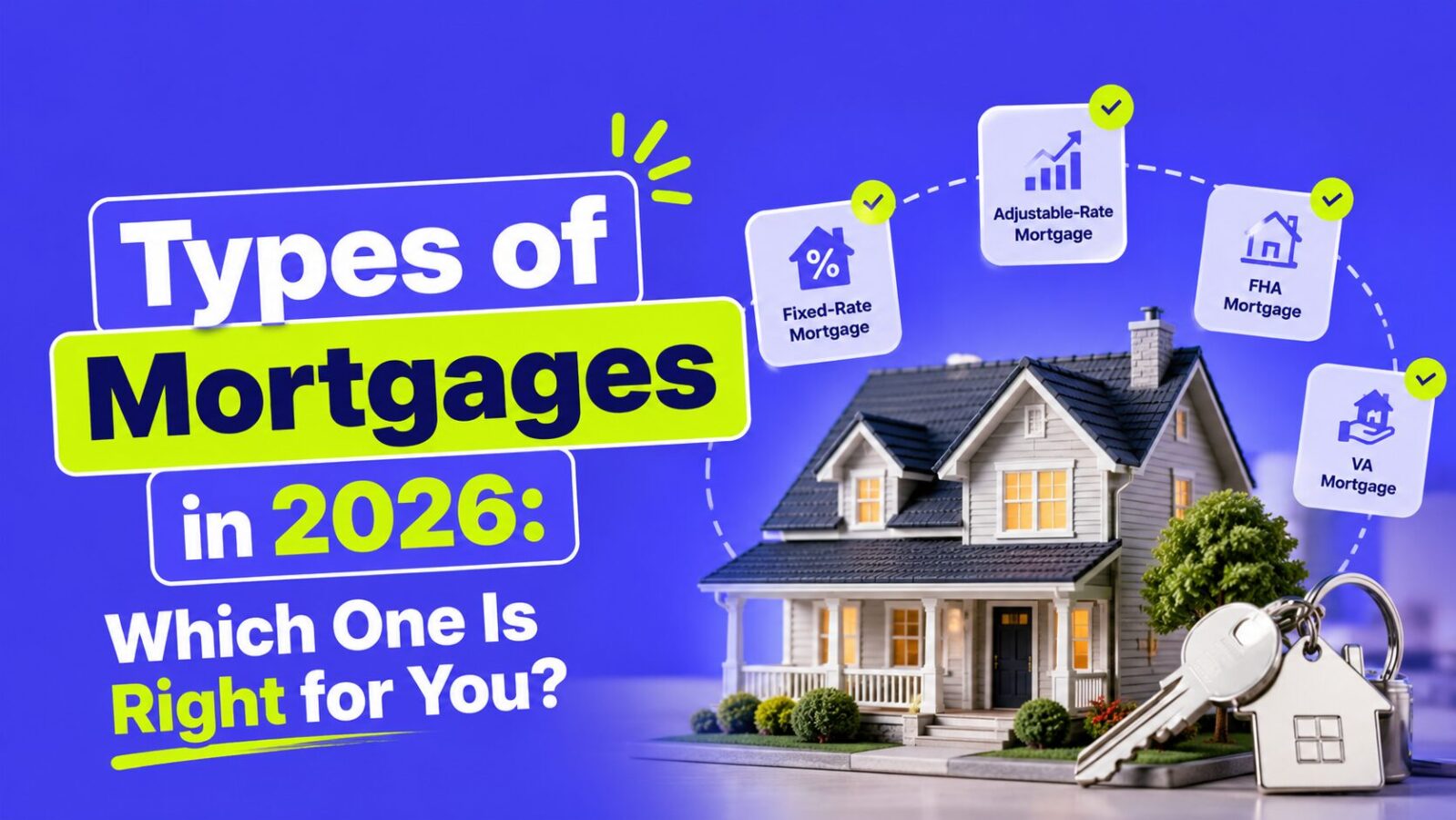
The mortgage you choose shapes your monthly payment, your total interest cost, your risk, and your flexibility for decades. With 30-year rates hovering around 6.4% in mid-2026, the choice between a 30-year fixed, a 15-year fixed, and an adjustable-rate mortgage involves real trade-offs worth understanding before you sign. Here is what to know about each, with the math laid out. Rates are examples as of June 2026 and change daily, so get current quotes from multiple lenders.
Key Takeaways
- The 30-year fixed offers the lowest payment and the most stability, but the most total interest.
- The 15-year fixed saves a large amount of interest and builds equity fast, at a much higher monthly payment.
- ARMs have lost their usual edge in 2026, since adjustable rates are now roughly in line with or above fixed rates.
- VA loans are almost always the best option for those eligible, with zero down and no PMI.
30-Year Fixed-Rate Mortgage
The most common mortgage in the U.S. Your rate and payment stay constant for the full 30 years, and predictability is the main benefit.
- Current rate (2026): roughly 6.25% to 6.5% for well-qualified borrowers.
- Monthly payment on a $320,000 loan at an example 6.25%: about $1,970.
- Total interest over 30 years: about $389,200.
Best for: buyers who plan to stay long-term, value payment stability, and want to free up monthly cash flow for other goals like investing or paying off other debt.
Drawback: early payments are almost all interest. In year one of that loan, you pay roughly $19,800 in interest and only about $3,840 in principal, so equity builds slowly at first.
15-Year Fixed-Rate Mortgage
The same stability as the 30-year, paid off in half the time, usually at a rate about 0.5% to 0.75% lower.
- Current rate (2026): roughly 5.5% to 5.85% for well-qualified borrowers.
- Monthly payment on a $320,000 loan at an example 5.5%: about $2,616.
- Total interest over 15 years: about $151,000.
- Savings vs the 30-year: roughly $238,000 in interest, plus the home is paid off 15 years sooner.
Best for: buyers who can comfortably afford the higher payment, want to build equity faster, and aim to be mortgage-free before retirement.
Drawback: the higher payment reduces flexibility. A job loss or income drop is harder to handle when the required payment is bigger.
Adjustable-Rate Mortgages (ARMs)
An ARM is fixed for an initial period, then adjusts annually based on a benchmark index. A 5/1 ARM is fixed for 5 years then adjusts each year; a 7/1 ARM is fixed for 7 years.
- Current rate (2026): roughly 6.4% to 6.6%, which is about the same as or even higher than today’s fixed rates.
Here is the key 2026 reality: ARMs normally tempt buyers with a lower starting rate, but right now that discount has mostly disappeared. When an adjustable rate is not meaningfully cheaper than a fixed rate, you are taking on future adjustment risk for little or no upfront savings, which weakens the case for an ARM in the current market.
Best for: buyers confident they will sell or refinance before the fixed period ends, but only if you can actually get a lower starting rate than the fixed option.
Risk: if you keep the loan past the fixed period and rates are higher, your payment rises. ARMs cap how much the rate can climb (often around 2% per adjustment and roughly 5% over the life of the loan), but even a capped increase on a large balance is significant.
FHA Loans
Government-backed loans insured by the Federal Housing Administration. They allow lower credit scores (580 or higher for 3.5% down) and smaller down payments than conventional loans. The trade-off is mortgage insurance: 1.75% upfront plus about 0.55% a year, which generally cannot be removed on loans that started above 90% loan-to-value.
Best for: first-time buyers with limited savings or credit in the 580 to 680 range who cannot qualify for conventional financing. See our guide to first-time homebuyer programs for assistance that pairs with an FHA loan.
VA Loans (Veterans Only)
Zero down payment, no PMI, and competitive rates, available to eligible veterans, active-duty service members, and surviving spouses. A funding fee (roughly 1.25% to 3.3%, waived for disabled veterans) replaces mortgage insurance. If you are eligible, this is almost always the best mortgage product available to you.
The 30-Year vs 15-Year Decision
If you can afford the 15-year payment without straining your budget, it wins mathematically on total interest and payoff time. If that payment would leave no room for retirement savings, your emergency fund, or other goals, a smarter middle path is a 30-year with intentional extra principal payments. Extra payments shorten the effective payoff without locking you into a higher required payment you might struggle to make in a tough month. Whatever you choose, line up your down payment first: see our guide on how to save for a down payment fast, and budget for homeowners insurance, which has been rising.
FAQ
Is a 15-year or 30-year mortgage better?
The 15-year saves far more interest and builds equity faster, but the payment is much higher. The 30-year offers lower payments and flexibility. If the 15-year would strain your budget, a 30-year with extra principal payments is a reasonable middle ground.
Are ARMs a good idea in 2026?
Less so than usual. Adjustable rates are currently around the same as or higher than fixed rates, so the typical lower-starting-rate advantage has mostly vanished, leaving you with adjustment risk for little upfront benefit.
What credit score do I need for an FHA loan?
Generally 580 or higher for 3.5% down. FHA also accepts newer credit models that can help buyers with thin credit files.
Why is a VA loan so good?
It offers zero down, no PMI, and competitive rates, with only a funding fee that is waived for disabled veterans. For eligible borrowers it is usually the best option available.
What mortgage rate will I actually get?
It depends on your credit, down payment, loan type, and the day you lock. The figures here are examples as of June 2026, so get personalized quotes from several lenders.
Bottom Line
For most buyers in 2026, the choice comes down to the 30-year fixed for flexibility or the 15-year fixed for interest savings, since ARMs no longer offer a clear rate discount. Pick based on what you can comfortably afford, not just the lowest payment, and remember that VA loans are the standout option for those who qualify. Rates change daily, so compare quotes from multiple lenders before you lock.
This article is for educational and informational purposes only and is not financial or lending advice. Mortgage rates change daily and depend on your credit, down payment, and loan details. Get personalized quotes from multiple lenders before making a decision.