 By
By 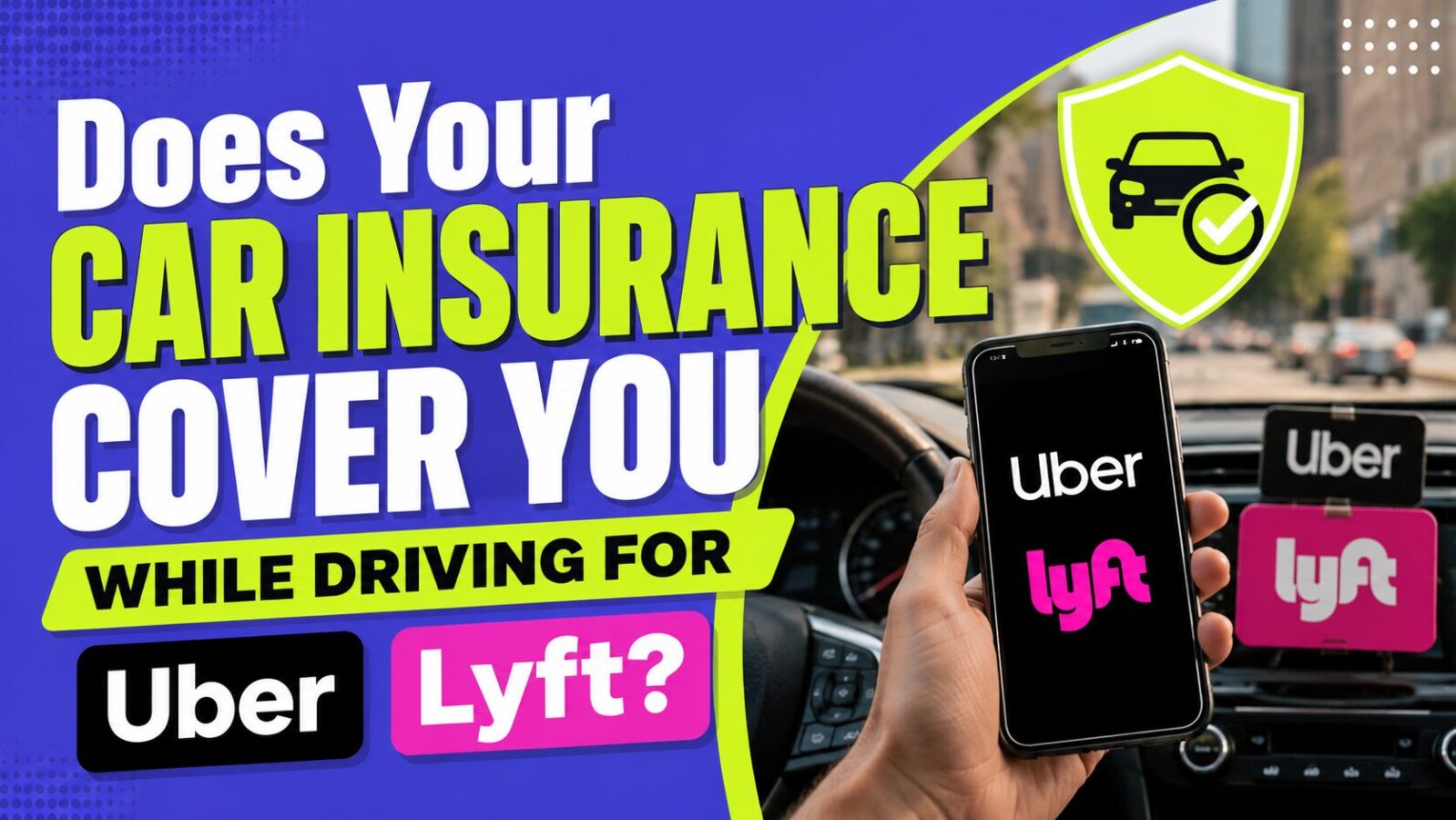
No, your personal car insurance generally stops covering you the moment you turn on the Uber or Lyft driver app, since that’s considered commercial activity. The most dangerous gap is “Period 1,” when you’re logged in and waiting for a ride request, your personal policy excludes you, and the rideshare company provides only minimal liability coverage. A rideshare endorsement, usually a few dollars to around $70 a month, closes this gap.
KEY TAKEAWAYS
- Your personal auto policy generally excludes you once you’re logged into a rideshare app, since driving for pay is a commercial activity most personal policies don’t cover.
- The riskiest window is “Period 1”, app on, no passenger matched yet, when rideshare companies only provide minimal liability coverage ($50,000/$100,000/$25,000).
- During active trips (Period 2 and 3), Uber and Lyft provide full coverage, but with a higher collision deductible, typically $2,500, compared to $500 on most personal policies.
- A rideshare endorsement added to your existing personal policy is usually enough, and is far cheaper than a full commercial policy, ranging from about $6 to $70 a month depending on insurer.
- California drivers should note SB 371 (effective January 2026) lowered the required uninsured/underinsured motorist minimum from $1 million to $300,000 per incident.
Why Doesn’t Your Personal Policy Cover You While Driving for Uber or Lyft?
Personal auto insurance is priced and underwritten based on personal, non-commercial use of your vehicle. The moment you accept payment for driving passengers, insurers classify that as commercial activity, which most personal policies specifically exclude. If you’re in an accident while logged into the app and haven’t added rideshare coverage, your personal insurer can legally deny the claim entirely, leaving you exposed for the full cost.
What Are the Three Periods of Rideshare Coverage?
| Period | Status | Coverage |
|---|---|---|
| Period 1 | App on, no match yet | Minimal: $50k/$100k bodily injury, $25k property damage |
| Period 2 | En route to pickup | Full company coverage, $2,500 collision deductible |
| Period 3 | Passenger in car | Full company coverage, $2,500 collision deductible |
Period 1 is the real danger zone, the coverage limits are far lower than most people carry on their personal policy, and if your personal insurer also denies the claim because you were technically “working,” you can end up with a serious gap in exactly the situation where you need coverage most.
How Do You Close the Gap?
A rideshare endorsement added to your existing personal auto policy is the standard fix for most part-time or occasional drivers, it fills the Period 1 gap and often reduces your collision deductible during active trips too. Costs vary significantly by insurer, some carriers offer it for just a few dollars a month, others closer to $70, so it’s worth comparing your current insurer’s rate against shopping around for cheap car insurance that includes this option. A full standalone rideshare policy, averaging around $154 a month, is generally only necessary for full-time drivers with significant rideshare income.
Do You Need a Commercial Auto Policy Instead?
Not usually. Full commercial auto insurance is designed for business fleets and delivery vehicles used far more extensively than typical rideshare driving, and it’s considerably more expensive than a rideshare endorsement. For most part-time Uber or Lyft drivers, the endorsement covers the actual gap without the cost of full commercial coverage. See our how much car insurance do you need guide for how rideshare coverage fits into your broader policy decisions.
What If You Get in an Accident Without a Rideshare Endorsement?
If you’re in Period 1 without an endorsement, you may be relying solely on the rideshare company’s minimal coverage, and your personal insurer could deny the claim for commercial use, potentially leaving you responsible for damages beyond that limited coverage. This is also a common trigger for needing GAP insurance if your vehicle is financed and gets totaled while the payout falls short of your loan balance.
FAQ
Does my personal car insurance cover me while driving for Uber or Lyft?
Generally no, once you’re logged into the app, your personal policy typically excludes coverage since it’s considered commercial activity, unless you’ve added a rideshare endorsement.
What is “Period 1” in rideshare insurance?
The window when you’re logged into the app but haven’t been matched with a passenger yet. It’s the highest-risk gap since rideshare companies only provide minimal liability coverage during this period.
How much does a rideshare insurance endorsement cost?
Roughly $6 to $70 a month in 2026 depending on your insurer, far cheaper than a full commercial auto policy for most part-time drivers.
Do I need a commercial auto policy to drive for Uber?
Usually not for part-time driving. A rideshare endorsement on your existing personal policy is generally sufficient unless you’re driving full-time with substantial rideshare income.
Bottom Line
Your personal auto insurance likely doesn’t cover you the moment you log into the Uber or Lyft app, and the gap during Period 1 is the riskiest, but a rideshare endorsement costing just a few dollars to around $70 a month typically closes it. Check with your current insurer before you start driving, not after an accident happens.
A quick note: rideshare insurance rules and required coverage minimums vary by state and can change, California’s 2026 update to UM/UIM minimums is one example. Confirm your specific state’s requirements and your insurer’s rideshare policy details directly before you start driving.