 By
By 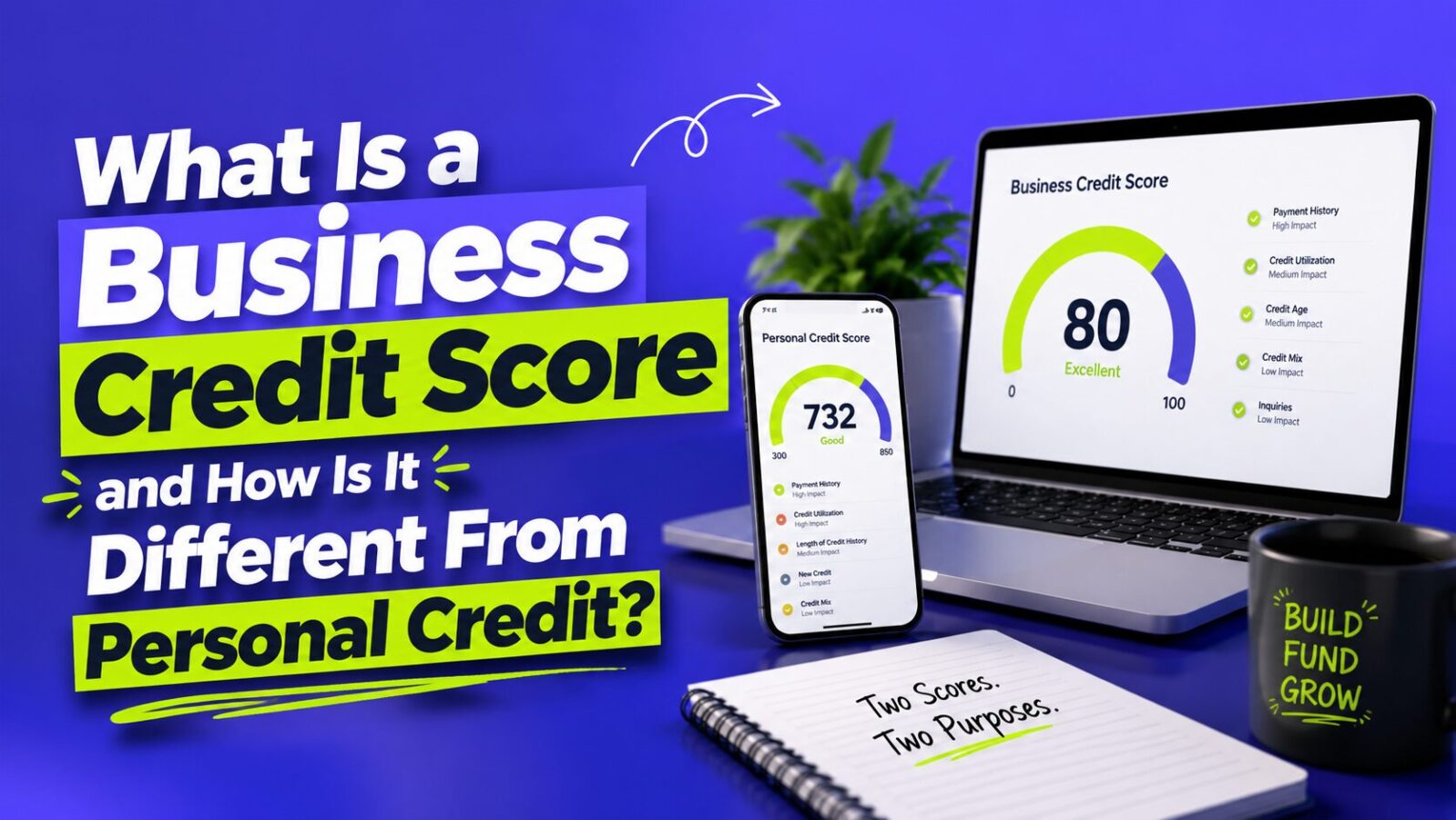
A business credit score rates your company’s creditworthiness separately from your own, using different bureaus (Dun & Bradstreet, Experian Business, Equifax Business) and different scales, most commonly 0-100 instead of the familiar 300-850 personal range. As a new small business owner, you likely have both: a personal score that follows you everywhere, and a business score that starts building the moment your company gets an EIN and its first trade line.
KEY TAKEAWAYS
- Business credit scores use different scales than personal credit: Dun & Bradstreet’s PAYDEX runs 1-100, Experian’s Intelliscore Plus runs 1-100, Equifax’s Business Credit Risk Score runs 101-992.
- Business scores are tied to your company’s EIN, not your Social Security number, and are public information any lender or supplier can pull without your permission.
- For a new business, most lenders and suppliers still rely heavily on your personal credit score until your company has enough of its own payment history.
- Business credit is built through trade lines, vendors and suppliers that report your payment history, not typically through consumer credit cards.
- Many small business loans and cards still require a personal guarantee, meaning your personal credit remains on the hook even for business debt.
How Are Business Credit Scores Different?
| Score | Bureau | Range | Good score |
|---|---|---|---|
| PAYDEX | Dun & Bradstreet | 1-100 | 80-100 (low risk) |
| Intelliscore Plus | Experian Business | 1-100 | 76+ |
| Business Credit Risk Score | Equifax Business | 101-992 | Higher is better |
| Your personal score | Equifax, Experian, TransUnion | 300-850 | 670+ |
Different lenders and suppliers pull different scores depending on their industry and relationship with you, so there isn’t one single “business credit score” the way there’s roughly one familiar personal FICO range most people recognize.
Why Does Your Personal Credit Still Matter for Your Business?
For most new and small businesses, personal credit remains the dominant factor lenders look at, since a brand-new business simply hasn’t built enough independent history yet. Many small business credit cards and loans also require a personal guarantee, meaning if your business can’t pay, you’re personally on the hook, and a missed business debt can show up on your personal credit report too. This is one reason our building credit from scratch guide is worth reviewing even if your main focus is your business, since your personal score often gates your business’s early access to credit.
How Do You Start Building Business Credit?
- Get an EIN (Employer Identification Number) from the IRS, free and separate from your Social Security number, which becomes the foundation of your business credit identity.
- Open accounts with vendors and suppliers that report payment history to business bureaus, since not all business vendors report the way consumer credit card issuers do.
- Keep business and personal finances separate, a dedicated business bank account and, ideally, a business entity structure (like an LLC), helps establish your company as its own credit entity.
- Pay early, not just on time, where possible. Business scores like PAYDEX specifically reward paying before the due date, unlike personal FICO scoring, which simply rewards on-time payment.
- Monitor your business credit reports, since errors on business files are common and, unlike personal credit, business credit reports are public, meaning anyone can pull them without your authorization.
Do Business Credit Cards Affect Your Personal Score?
It depends on the card and issuer. Some business credit cards report to personal credit bureaus (which can help or hurt your personal score depending on your payment behavior), while others report primarily or only to business bureaus. If you’re weighing a credit builder loan versus a business card specifically to build credit, check the specific card’s reporting policy first, since this varies significantly by issuer and isn’t always obvious from marketing materials.
Should Self-Employed People Care About Business Credit?
If you’re a sole proprietor or freelancer without a separate business structure, you may not have a meaningful separate business credit profile at all, most lenders will simply evaluate you based on personal credit and your self-employment income and tax filings. Business credit becomes more relevant once you form a distinct business entity and start building trade relationships specifically under that entity’s name.
FAQ
Is business credit the same as personal credit?
No. Business credit uses different bureaus, different scoring scales (commonly 0-100 or similar), and is tied to your business’s EIN rather than your Social Security number.
Does bad business credit affect my personal credit score?
It can, especially if you signed a personal guarantee on a business loan or card, which makes you personally responsible if the business can’t pay.
How do I check my business credit score?
You can request reports directly from Dun & Bradstreet, Experian Business, and Equifax Business, though unlike personal credit, you may need to pay for full access to your business credit report.
Do I need an LLC to build business credit?
Not strictly, but forming a distinct business entity and getting an EIN makes it much easier to establish credit separate from your personal identity.
Bottom Line
Business credit runs on a different set of scores and bureaus than your personal credit, but for most new business owners, personal credit still plays a major role until the business builds its own independent history. Start with an EIN, a separate business bank account, and vendors that report payment history if building business credit is a priority.
A quick note: business credit scoring varies significantly by industry and lender, so this guide is a general overview, not tailored advice for your specific business. A small business accountant or lender can help you map out the fastest path to building credit for your specific situation.