 By
By 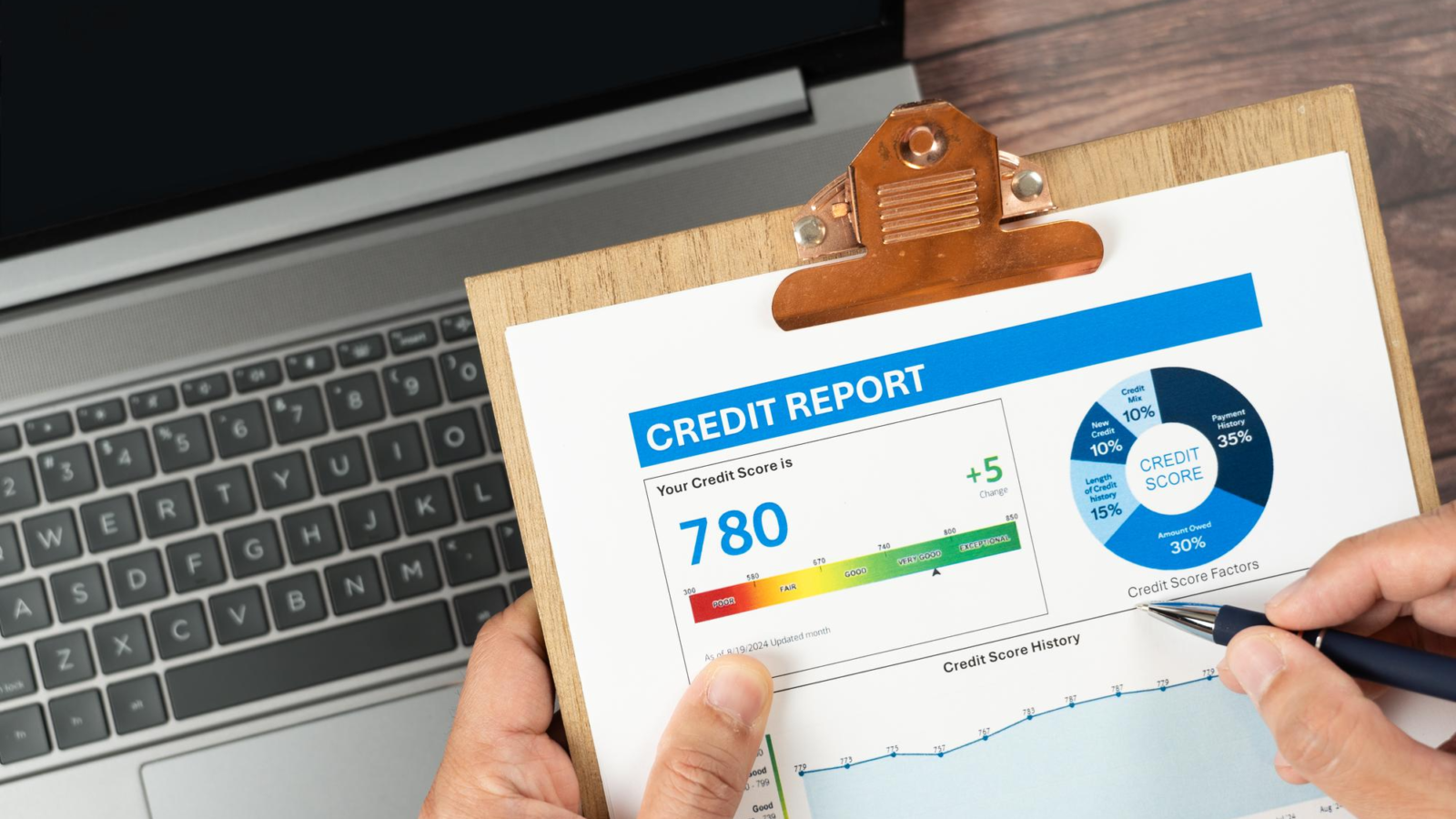
Your credit report is one of the most important financial documents you will ever deal with — and most people have never actually read theirs. It determines whether you get approved for apartments, car loans, mortgages, and credit cards. It influences the interest rates you pay and can even affect your job prospects.
Your credit report is not some mysterious black box. Once you know how to read it, it is actually straightforward. And understanding what is in there — and what should not be — is one of the most powerful money moves you can make.
Credit report vs. credit score: what is the difference?
Your credit report is a detailed record of your credit history — every credit account you have opened, your payment history, outstanding balances, and more. Think of it as a financial transcript.
Your credit score is a three-digit number (300 to 850) calculated from the data in your credit report. Think of it as your GPA — a single number that summarizes the detailed information. The most widely used scoring model is FICO, though VantageScore is also common.
Lenders look at both. Your score gets your foot in the door, but underwriters often review the full report before a final decision. A good score with a concerning item (like a recent collection) can still cause problems. Read our full credit score guide for a deep dive into what moves your number.
The three credit bureaus
Your credit history is tracked by three major credit bureaus: Equifax, Experian, and TransUnion. These are private companies, not government agencies. They collect information from lenders, creditors, and public records to compile your report. Each bureau may have slightly different information because not all creditors report to all three.
This is why your score can vary by bureau — your Experian score might be 745 while your TransUnion score is 738, and both are correct based on the data each has. When you apply for a mortgage, the lender pulls all three reports and uses the middle score. Because you cannot predict which bureau a lender will check, you need to monitor all three.
How to get your credit reports for free
You are legally entitled to free credit reports through several channels.
AnnualCreditReport.com is the official, federally authorized source. Since 2023, free weekly access to all three reports has been made permanent — there is no reason to ever pay for a credit report.
Other free sources: Credit Karma (free TransUnion and Equifax reports and VantageScores), Experian’s free account (Experian report and FICO Score), and most major bank or credit card apps (many now provide free FICO scores and report summaries).
Always use legitimate sources. Never pay for a credit report.
What is on your credit report: section by section
1. Personal information
Your full name, date of birth, Social Security number (partially masked), current and previous addresses, phone numbers, and employers.
What to check: Make sure your name is spelled correctly and your addresses are accurate. Unfamiliar names or addresses could indicate identity theft or a mixed file (someone else’s information merged with yours). Nothing in this section impacts your credit score — it is purely identifying information.
2. Credit accounts (trade lines)
Every credit account you have or have had appears here with the creditor name and account number (partially masked), account type (revolving, installment, or open), date opened and credit limit or original loan amount, current balance and payment status (current, 30/60/90 days late, charged off), and a month-by-month payment history.
What to check: Accounts you do not recognize (possible fraud), incorrect balances, or payment history errors. A single incorrectly reported late payment can drop your score 50 to 100 points.
3. Credit inquiries
| Inquiry type | Affects score? | Visible to lenders? | Duration |
|---|---|---|---|
| Hard inquiry | Yes (small impact) | Yes | 2 years |
| Soft inquiry | No | No | 2 years |
Hard inquiries happen when you apply for credit. Soft inquiries happen when you check your own credit, when a company pre-screens you, or when an existing creditor reviews your account.
Multiple hard inquiries for the same loan type (mortgage, auto) within a 14 to 45 day window are grouped as a single inquiry — the bureaus understand you are rate shopping.
4. Public records
Since 2018, only bankruptcies appear in this section. Chapter 7 bankruptcy remains for 10 years from the filing date; Chapter 13 remains for 7 years.
5. Collections
When you fail to pay a debt, the original creditor often sells it to a collection agency. That collection then appears as a separate entry. Common sources: medical bills, utility bills, cell phone bills, unpaid rent, and old credit card debt.
What to check: The balance amount, original creditor, and date of first delinquency (which determines when it falls off). Paid collections should be marked as such — newer FICO models (FICO 9 and 10) ignore paid collections entirely.
As of 2023, paid medical collections are removed from credit reports, and medical debts under $500 are no longer reported. If you are dealing with medical bills, read our guide on how to negotiate medical bills.
What hurts your credit score the most
| Factor | Weight | What it means |
|---|---|---|
| Payment history | 35% | Whether you pay on time |
| Credit utilization | 30% | How much of your available credit you use |
| Length of credit history | 15% | How long your accounts have been open |
| Credit mix | 10% | Variety of account types |
| New credit | 10% | Recent applications and new accounts |
The biggest score killers are: late payments (a single 30-day late payment drops your score 50 to 100+ points and stays for 7 years), high credit utilization (keep it under 30%, under 10% for best results), collections and charge-offs (7 years), bankruptcy (7 to 10 years), and too many hard inquiries in a short period.
How to dispute errors: step by step
The FTC has found that roughly 1 in 5 consumers has an error on at least one credit report.
Step 1: Identify the error
Common errors: accounts that do not belong to you, incorrect balances or credit limits, payments marked as late when they were on time, duplicate accounts, closed accounts reported as open, outdated negative items that should have fallen off.
Step 2: Gather documentation
Collect evidence: bank statements showing on-time payments, letters from creditors confirming account details, identity theft reports if applicable, and any related correspondence.
Step 3: File your dispute
Online (fastest):
- Equifax: equifax.com/personal/disputes
- Experian: experian.com/disputes
- TransUnion: transunion.com/dispute
Through the CFPB: File a complaint at consumerfinance.gov/complaint. The CFPB forwards your complaint to the bureau and tracks the response, often getting faster results.
By mail: Write a formal dispute letter with your name, address, SSN, the specific item, why it is incorrect, and copies (never originals) of supporting documents. Send via certified mail with return receipt.
Step 4: Wait for investigation
By law, bureaus must investigate within 30 days (45 days if you provide additional information). They contact the creditor to verify the reported information.
Step 5: Review results and escalate if needed
If the dispute is resolved in your favor, the item is corrected or removed. If not, you can add a 100-word consumer statement, re-dispute with more evidence, escalate through the CFPB, or consult a consumer rights attorney specializing in FCRA violations.
How long negative items stay on your report
| Item | Duration |
|---|---|
| Late payments | 7 years from date of delinquency |
| Collections | 7 years from date of first delinquency |
| Charge-offs | 7 years from date of first delinquency |
| Chapter 7 bankruptcy | 10 years from filing date |
| Chapter 13 bankruptcy | 7 years from filing date |
| Hard inquiries | 2 years (score impact fades after ~12 months) |
| Foreclosure | 7 years from filing date |
| Closed accounts in good standing | 10 years from date closed |
The clock starts from the date of first delinquency — not the date the account went to collections. Some unethical collectors try to “re-age” debts by reporting a newer delinquency date. If you spot this, dispute it immediately.
Credit monitoring services
Free options (sufficient for most people): Credit Karma (monitors TransUnion and Equifax, sends alerts), Experian free account (monitors Experian, provides free FICO score), bank and card apps (Chase, Capital One, Discover, and others offer basic monitoring).
Paid options ($10 to $30/month): Services like IdentityGuard, LifeLock, and Aura add all three bureau monitoring, dark web scanning, identity theft insurance (usually $1 million), and dedicated recovery specialists.
Our take: free monitoring is sufficient for most people. Paid services add value primarily if you have been a victim of identity theft.
Credit freezes vs. fraud alerts
Credit freeze
A credit freeze locks your report so no one can open new accounts until you lift it. Free at all three bureaus since 2018, does not affect your score or existing accounts, and must be placed separately at each bureau.
How to freeze:
- Equifax: equifax.com/personal/credit-report-services/credit-freeze
- Experian: experian.com/freeze
- TransUnion: transunion.com/credit-freeze
Fraud alert
A fraud alert tells lenders to take extra verification steps before opening accounts in your name. Unlike a freeze, lenders can still see your report.
- Initial fraud alert: 1 year, no documentation needed, contact one bureau and they notify the others
- Extended fraud alert: 7 years, requires an FTC identity theft report
- Active duty alert: 1 year, for deployed military members
| Feature | Credit freeze | Fraud alert |
|---|---|---|
| Protection level | Strongest | Moderate |
| Cost | Free | Free |
| Duration | Until you lift it | 1 or 7 years |
| Impact on applications | Must lift first | Extra verification steps |
| Setup | Each bureau separately | One bureau notifies others |
Recommendation: If you are not actively applying for new credit, freeze all three bureaus. It takes about 15 minutes and provides the strongest protection.
Your credit report action plan
- Pull all three reports at AnnualCreditReport.com today — it is free and takes 10 minutes
- Review each section — personal info, accounts, inquiries, public records, collections
- Flag any errors and begin the dispute process immediately
- Set up free monitoring through Credit Karma or your bank’s app
- Consider a credit freeze if you are not actively applying for new credit
- Schedule your next review — put it in your calendar for 4 months from now
Once your credit report is clean, here is where to go next:
- Score needs improvement? Read our credit score improvement guide — the 30 to 90 day strategies can move your score quickly once errors are resolved.
- No credit history at all? Read our credit building guide for the 12-month roadmap from zero to 700+.
- Ready to apply for your first rewards card? Our best no-annual-fee credit cards guide shows you exactly which card fits your current credit profile.