 By
By 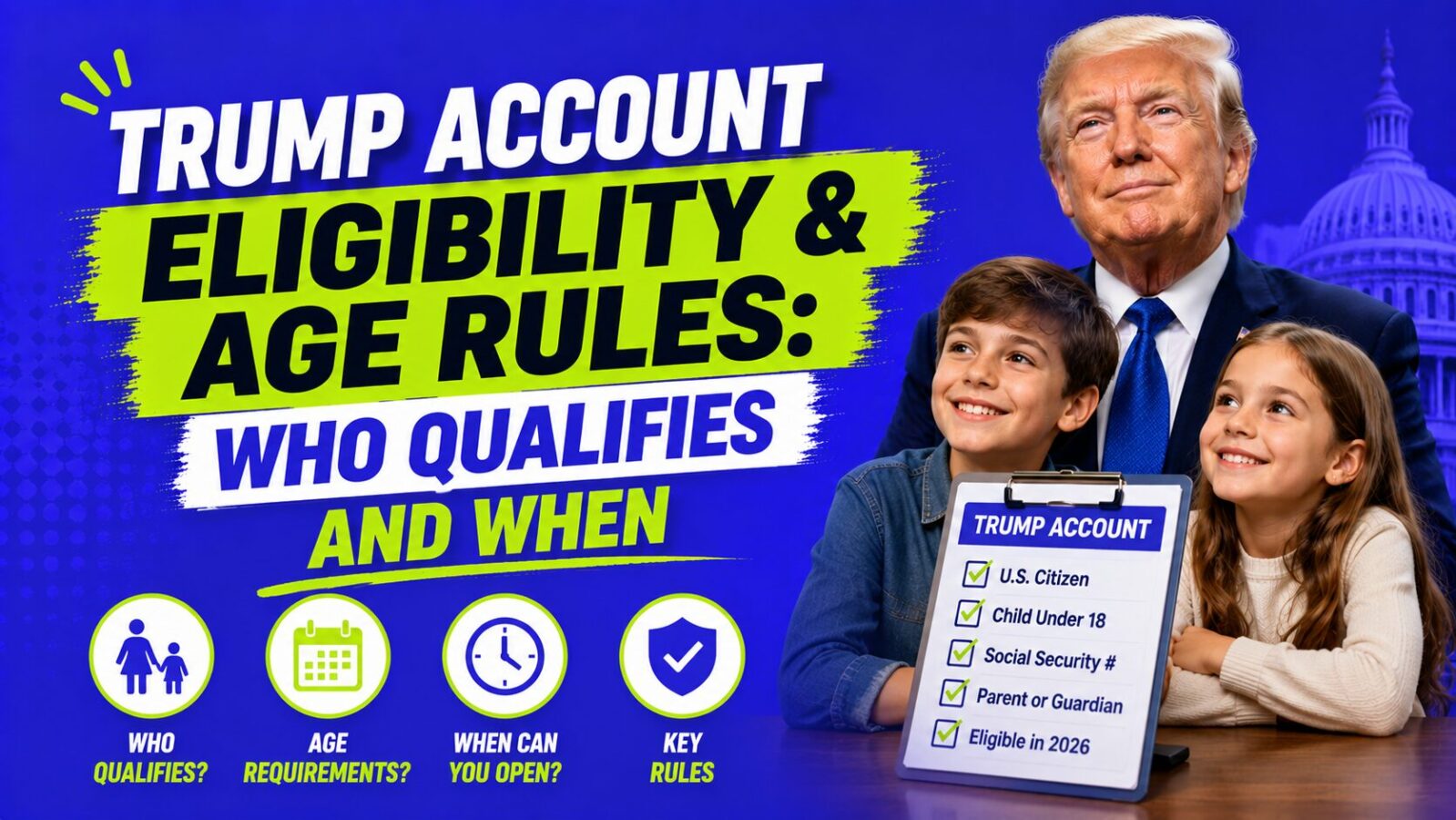
Trump Account eligibility comes down to three things: your child must be a U.S. citizen, have a valid Social Security number, and be under 18 for the entire year you open the account. That covers who can have one at all under Section 530A, the part of the 2025 tax law (the One Big Beautiful Bill, or OBBBA) that created Trump Accounts. Which dollar amounts you get on top of that (the $1,000 federal seed, the $250 Dell Foundation deposit, or neither) depends on a separate set of age and birth-year rules that trip up a lot of parents, so here’s every age rule in one place.
KEY TAKEAWAYS
- Basic eligibility: U.S. citizen, valid SSN (not an ITIN), and under 18 for the whole calendar year you open the account.
- Three separate age rules stack on top of basic eligibility: the $1,000 seed (birth year 2025-2028), the $250 Dell deposit (age 10 or under plus qualifying ZIP), and general opening eligibility (any age under 18).
- You cannot open a Trump Account in the calendar year your child turns 18. The cutoff is the year before, not the birthday itself.
- The child is the account’s beneficiary and legal owner. A parent or legal guardian is the “authorized individual” who manages it until the child turns 18.
- U.S. citizen children born overseas, including on a military base, qualify the same as children born in the U.S., as long as they have a valid SSN.
Who Meets Basic Trump Account Eligibility?
Three requirements, all required at once: the child must be a U.S. citizen, must have a valid Social Security number (an ITIN, the tax ID number the IRS issues to people who aren’t eligible for an SSN, does not count), and must be under 18 for the entire calendar year in which the account is opened. There’s no minimum age. A newborn qualifies the same day they get a Social Security number, and so does a 17-year-old, as long as they turn 18 the following year, not the year the account opens.
Assuming those three boxes are checked, income, family structure, and where you live don’t affect basic eligibility. They do affect which extra deposits your child qualifies for, covered below.
What Does the “Age Limit” Actually Mean?
The age limit that matters for opening an account is simple but easy to misread: your child must be under 18 for the whole year you open it. In practice, that means the last year you can open a new Trump Account for a child is the year before their 18th birthday, not the year they turn 18. A child who turns 18 in 2027, for example, needed their account opened by the end of 2026.
The age-18 cutoff only governs whether you can open an account and add money to it. It has nothing to do with whether the child receives the $1,000 seed or the $250 Dell deposit, which follow their own separate rules.
Which Age or Birth Year Determines Which Benefit?
Most of the confusion happens because three different rules use age or birth year for three different purposes. Here’s how they compare side by side.
| Rule | Age/birth-year requirement | What it controls |
|---|---|---|
| General eligibility | Under 18 for the full calendar year opened | Whether a Trump Account can exist at all for this child |
| $1,000 federal seed | Born Jan. 1, 2025 through Dec. 31, 2028 | Whether the government deposits $1,000 |
| $250 Dell deposit | Age 10 or under, plus a qualifying ZIP code | Whether the Dell Foundation deposits $250 (see our full breakdown) |
| Account conversion | Turns 18 | Account converts to a traditional IRA |
A quick way to think about it: general eligibility asks “can this account exist,” the $1,000 rule asks “when was the child born,” the $250 rule asks “how old is the child right now, and where do they live,” and the conversion rule asks “has the child turned 18 yet.” All four can point to different answers for the same child.
Three Examples: Putting the Rules Together
The fastest way to see how these rules interact is to run a few real families through them.
A baby born in March 2026, living in a ZIP code with median income of $95,000: qualifies for basic eligibility (under 18, U.S. citizen with an SSN), the $1,000 federal seed (born in the 2025-2028 window), and the $250 Dell deposit (age 10 or under, qualifying ZIP). Total seed money: $1,250, assuming both deposits land.
An 8-year-old born in 2018, living in a ZIP code with median income of $180,000: qualifies for basic eligibility and can have an account opened for them, but gets neither extra deposit. No $1,000, because they were born before 2025. No $250, because their ZIP code’s median income is above the $150,000 cutoff.
A 16-year-old born in 2010, living in a ZIP code with median income of $70,000: qualifies for basic eligibility (still under 18 for the year the account is opened) and can open an account before turning 18. No $1,000 (wrong birth year) and no $250 either, since the Dell deposit is capped at age 10 or under regardless of ZIP code. They still get the tax-deferred growth and the eventual IRA conversion, just without either seed deposit.
Who Is the Beneficiary, and Who Controls the Account?
The child is the account’s legal owner and beneficiary from day one, the same structure as a custodial account. A parent or legal guardian is the “authorized individual” named on IRS Form 4547, and that person manages contributions and investment choices until the child turns 18. Grandparents and other relatives can contribute money to an existing account, but generally cannot be the one to open it unless they are the child’s legal guardian. Our guide on grandparents and Trump Accounts covers that distinction in detail.
Because the child is the legal owner, the money in the account is the child’s asset, not the parent’s. That matters for financial aid calculations and for what happens if a parent’s authority needs to transfer to someone else before the child turns 18.
What Happens the Year Your Child Turns 18?
Control of the account shifts. The Trump Account converts to a traditional IRA in the child’s name, and the now-adult child takes over management themselves. Our full guide to turning 18 walks through the conversion mechanics, tax treatment, and what to decide before it happens.
Do Kids Born Outside the U.S. or to Non-Citizen Parents Qualify?
What matters is the child’s own citizenship and SSN, not the parents’ status or where the birth happened. A U.S. citizen child born in Paris, Tokyo, or on a U.S. military base overseas qualifies the same as a child born in a U.S. hospital, as long as they have a valid Social Security number. A child without U.S. citizenship, or one who only has an ITIN instead of an SSN, does not qualify, regardless of where the parents live or work.
Frequently Asked Questions
Is there a minimum age to open a Trump Account?
No. There’s no minimum age. A newborn qualifies as soon as they have a Social Security number.
What’s the maximum age to open a Trump Account?
You must open it in a year before the child turns 18. The account cannot be opened in the calendar year of their 18th birthday.
Does age determine the $1,000 seed?
No, birth year does. Only children born January 1, 2025 through December 31, 2028 get the $1,000 federal deposit, regardless of when the account is opened.
Who is the beneficiary of a Trump Account?
The child. They legally own the account from the start; a parent or guardian manages it on their behalf until they turn 18.
Can a non-citizen child have a Trump Account?
No. The child must be a U.S. citizen with a valid Social Security number. Citizenship and immigration status of the parents does not matter, only the child’s own status.
Bottom Line
Basic eligibility for a Trump Account is U.S. citizenship, a valid SSN, and being under 18 for the whole year you open it. On top of that baseline, three separate age or birth-year rules determine the $1,000 federal seed, the $250 Dell deposit, and the IRA conversion at 18, and they don’t all use the same cutoff. If you’re checking whether your specific child qualifies for the extra money rather than just the account itself, check birth year for the $1,000 and current age plus ZIP code for the $250.
Last updated: July 7, 2026. Eligibility details sourced from IRS Form 4547 instructions and reporting from Chase, Fidelity, and TurboTax on Trump Account rules. Trump Accounts are a new program and rules may change. This article is for educational purposes only and does not constitute financial, investment, or tax advice. Confirm your child’s specific eligibility at trumpaccounts.gov or with a qualified professional.