 By
By 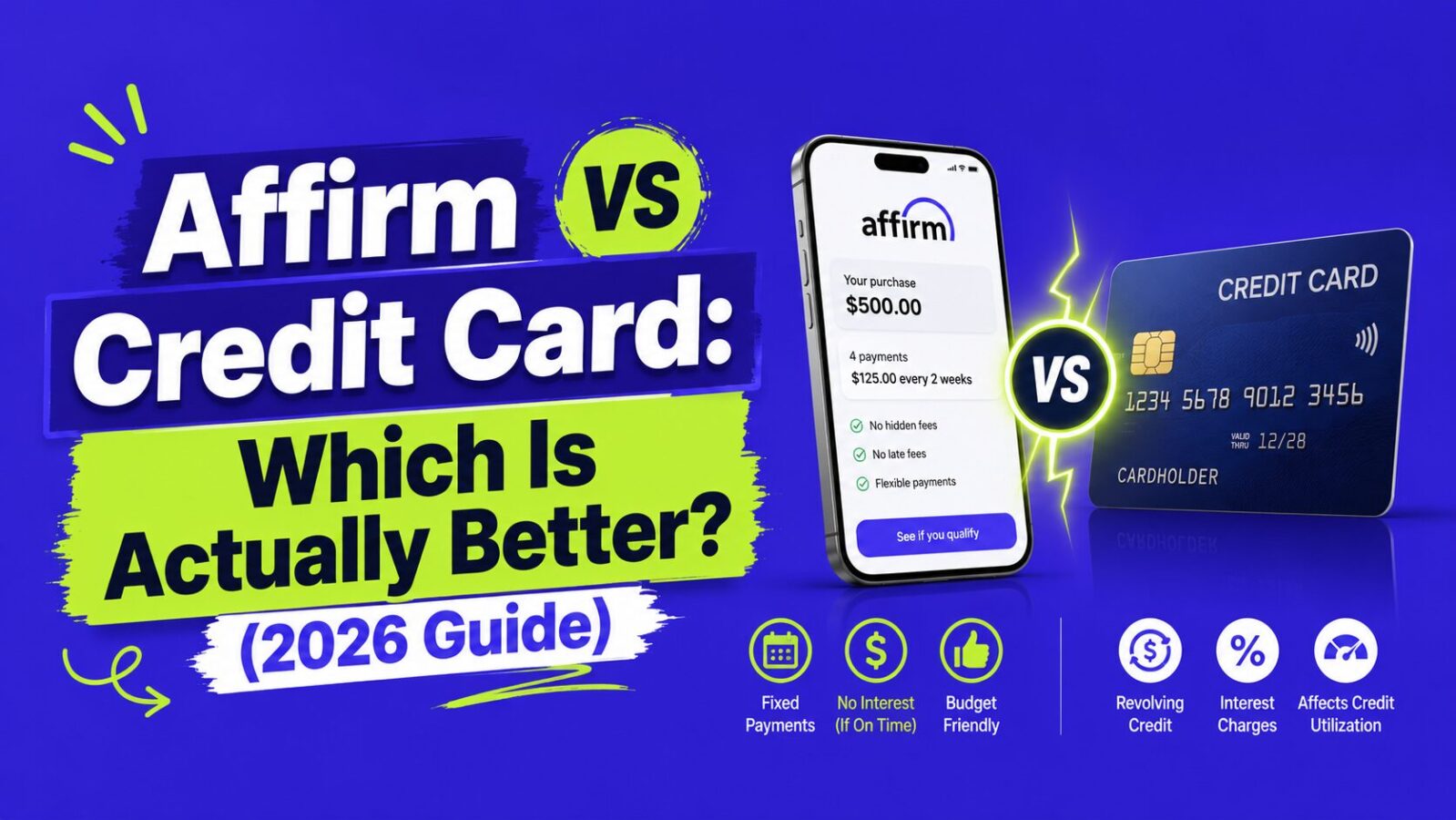
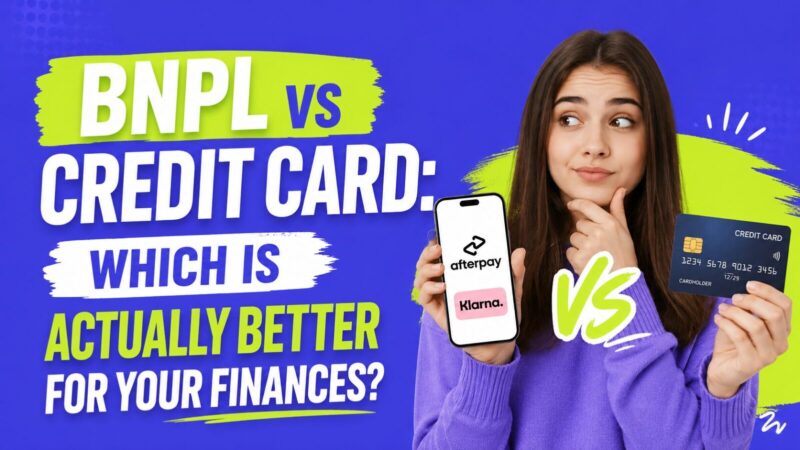
Affirm and credit cards both let you buy something today and pay over time. That is where the similarity ends. One charges no interest on its short-term plan but earns you nothing. The other earns cash back on every purchase, protects you against fraud and damaged goods, and builds your credit, but can cost you significantly more if you carry a balance. The right answer depends entirely on how you use each one.
How Affirm Works in 2026
Affirm is a buy now, pay later (BNPL) service that offers two distinct products at checkout.
Pay in 4: Four equal payments spread over six weeks, charged every two weeks. The APR is 0%. There are no fees of any kind, including no late fees. Most Pay in 4 plans are available for purchases between roughly $50 and $1,000, though the range varies by merchant. Approval uses a soft credit check that does not affect your credit score.
Monthly installment loans: Longer repayment terms from 3 to 60 months, with APRs ranging from 0% to 36% depending on your creditworthiness, the merchant, and whether the retailer is sponsoring a promotional 0% offer. Some major retailers (Amazon, Best Buy, Peloton, and others) offer 0% APR financing for specific purchases through Affirm. For purchases without a 0% promotion, Affirm’s standard rates can reach 36%, which is higher than the average credit card APR. Affirm reports that approximately 43% of its loans carry 0% APR.
Affirm never charges late fees, which is unusual in the lending space. Missing a payment does not trigger a penalty charge, but it can now affect your credit report, which is covered below.
How Credit Cards Work
A credit card is a revolving line of credit. You can charge up to your credit limit on any purchase at any merchant that accepts the card’s payment network (Visa, Mastercard, Amex, or Discover). At the end of each billing cycle, you receive a statement. Pay the full statement balance before the due date and you owe no interest. Carry any portion of the balance into the next cycle and interest accrues at the card’s APR, which currently averages around 20% to 22% across all credit cards.
Most no-annual-fee credit cards also earn rewards: 1.5% to 2% cash back on every purchase, with some cards earning 3% or more in specific categories. Cards include fraud protection ($0 liability on unauthorized charges), and some include purchase protection covering new items against theft or damage.
The Core Comparison: When Each Wins
When Affirm Pay in 4 Is Better
Affirm’s Pay in 4 makes financial sense in a specific scenario: you want to spread a purchase over six weeks without paying interest, and you would otherwise carry the purchase on a credit card balance at 20%+.
On a $600 purchase, paying over six weeks with Affirm Pay in 4 costs exactly $600, split into four $150 payments. If instead you put that $600 on a credit card, paid only the minimum each month, and carried the balance for six months at 21% APR, you would pay roughly $40 in interest before the balance was cleared. Pay in 4 saves you that $40 while keeping the same payment discipline of four scheduled installments.
Affirm also wins clearly when a merchant offers a 0% APR monthly installment plan for a specific large purchase. A $2,000 laptop financed at 0% APR over 12 months through Affirm costs exactly $2,000, at $166.67 per month. The same purchase on a credit card with a balance carried at 21% APR for 12 months costs roughly $2,220. If you cannot or will not pay the credit card balance in full each month, the 0% Affirm offer is the better financial choice for that specific purchase.
When a Credit Card Is Better
A credit card is the better choice whenever you pay your full statement balance every month. For a cardholder who does not carry a balance, a credit card offers:
- Cash back on every purchase. A flat-rate 2% card like the Citi Double Cash returns $12 on a $600 purchase. Affirm Pay in 4 returns nothing.
- Purchase protection. Cards like Chase Freedom Unlimited cover new purchases against theft and damage for 120 days. Affirm provides no purchase protection.
- Extended warranty. The Citi Double Cash doubles manufacturer warranties up to 24 months on eligible purchases. Affirm does not.
- Fraud protection. Credit cards provide $0 liability on unauthorized charges, real-time alerts, and card lock. Affirm does not provide the same protection on purchases already made.
- Universal acceptance. Visa and Mastercard are accepted at nearly every merchant globally. Affirm is only available at participating merchants and is not universally accepted.
- Credit building across three bureaus. Most credit cards report monthly to Equifax, Experian, and TransUnion. Affirm currently reports only to Experian and TransUnion, and traditional FICO models do not yet fully factor BNPL data into scores.
For the average transactor, meaning someone who pays their credit card in full each month, using Affirm instead of a rewards credit card on a $600 purchase means forgoing $12 in cash back and purchase protection, in exchange for a payment schedule you did not actually need.
The Credit Score Question: What Changed in 2025
Affirm’s credit reporting policy changed significantly in 2025 and is worth understanding clearly.
As of April 2025, Affirm reports all pay-over-time products, including Pay in 4, to Experian. As of May 2025, reporting expanded to TransUnion as well. This means every Affirm loan, including short-term Pay in 4 plans, now appears on your Experian and TransUnion credit files. Affirm does not currently report to Equifax.
There are two important nuances. First, traditional FICO credit scoring models do not currently factor Affirm’s BNPL data into your score, meaning on-time Affirm payments do not yet reliably improve your FICO score even though they appear on your credit report. Future scoring models may incorporate this data. Second, missed or late payments on any Affirm plan are reported as delinquencies and can now damage your credit score at two bureaus. The asymmetry is notable: the upside (credit building) is limited and uncertain in 2026, while the downside (credit damage from missed payments) is real and immediate.
Credit cards, by contrast, report to all three bureaus monthly, and on-time payments directly and reliably improve your payment history, which is the single most important factor in your credit score. For building credit intentionally, a credit card used responsibly is a more reliable tool than Affirm in 2026.
The Interest Rate Trap With Affirm Monthly Loans
Affirm’s Pay in 4 is genuinely interest-free. But Affirm’s monthly installment loans are not, and the rates can reach 36%, higher than most credit cards. This creates a counterintuitive situation: a consumer choosing Affirm monthly financing over a credit card to “avoid credit card interest” may actually be paying a higher rate than their credit card charges.
Before accepting a monthly Affirm loan, compare the stated APR against your credit card’s APR. If the Affirm rate is lower and you intend to finance the purchase over several months regardless, Affirm may save money. If the Affirm rate is higher, the credit card is the cheaper financing option even with interest. Affirm’s transparent upfront disclosure of total cost makes this comparison straightforward: the total cost shown at Affirm checkout is fixed and will not increase. Credit card interest compounds monthly on a revolving balance and can grow if you only make minimum payments.
What Affirm Does Not Offer That Credit Cards Do
For anyone evaluating Affirm as a primary payment method, a few absent features are worth naming directly.
Affirm earns no rewards. There is no cash back, no points, no miles. Every dollar you spend through Affirm instead of a rewards card is a dollar that earns nothing. At 2% cash back on a $3,000 laptop financed through Affirm, the opportunity cost is $60 in uncollected rewards.
Affirm does not provide purchase protection. If the item you financed is stolen the week after it arrives, Affirm does not reimburse you. A credit card with purchase protection would cover the loss up to the card’s per-claim limit.
Affirm’s refund process can be slower than credit cards. User reports consistently flag that returns through Affirm take longer to process than credit card chargebacks, and the refund appears as a credit against your installment plan rather than as a reversal of charges that can be spent on something else immediately.
Side-by-Side Summary
| Affirm Pay in 4 | Affirm Monthly Loan | No-Annual-Fee Credit Card | |
|---|---|---|---|
| Interest rate | 0% | 0%–36% APR | 0% if paid in full; 17–27% if balance carried |
| Late fees | None | None | Up to $41 |
| Cash back / rewards | None | None | 1.5%–3%+ on purchases |
| Purchase protection | None | None | On select cards (e.g. Chase Freedom Unlimited) |
| Fraud protection | Limited | Limited | $0 liability, card lock, real-time alerts |
| Credit building | Experian + TransUnion only (FICO impact uncertain) | Experian + TransUnion only | All 3 bureaus, reliable FICO impact |
| Acceptance | Participating merchants only | Participating merchants only | Near-universal (Visa/Mastercard) |
| Annual fee | None | None | $0 (no-annual-fee cards) |
The Honest Answer: Which Is Better?
For someone who pays their credit card in full every month, a rewards credit card is almost always better than Affirm for everyday purchases. The rewards, fraud protection, and purchase coverage add real value at zero additional cost. Affirm Pay in 4 offers nothing equivalent.
Affirm makes sense in two specific situations. First, when a merchant offers a genuine 0% APR promotional financing deal through Affirm for a large purchase, and you intend to pay in installments regardless. In this case, the 0% rate beats carrying that balance on a credit card. Second, when a consumer has a pattern of carrying credit card balances and the structured fixed-payment schedule of Affirm Pay in 4 creates discipline that prevents additional interest accumulation.
The most expensive Affirm scenario is the monthly loan with high APR. A consumer who uses Affirm at 30% APR instead of a credit card at 22% APR, believing BNPL is inherently cheaper than credit cards, pays more in interest than they would have on the card. Affirm’s transparency about total cost is a genuine feature: the number at checkout is the maximum you will pay. But that number can be higher than a credit card alternative, and the appeal of “not using a credit card” should not override the actual math.
Affirm Pay in 4 and monthly loan terms accurate as of May 2026 per Affirm’s help center and investor disclosures. Affirm began reporting all products to Experian April 1, 2025 and to TransUnion May 1, 2025; traditional FICO models do not currently factor BNPL data into scores. Affirm does not report to Equifax. Average credit card APR figures are approximate and vary by card and applicant. This article is for informational purposes only and does not constitute financial advice.