By
By 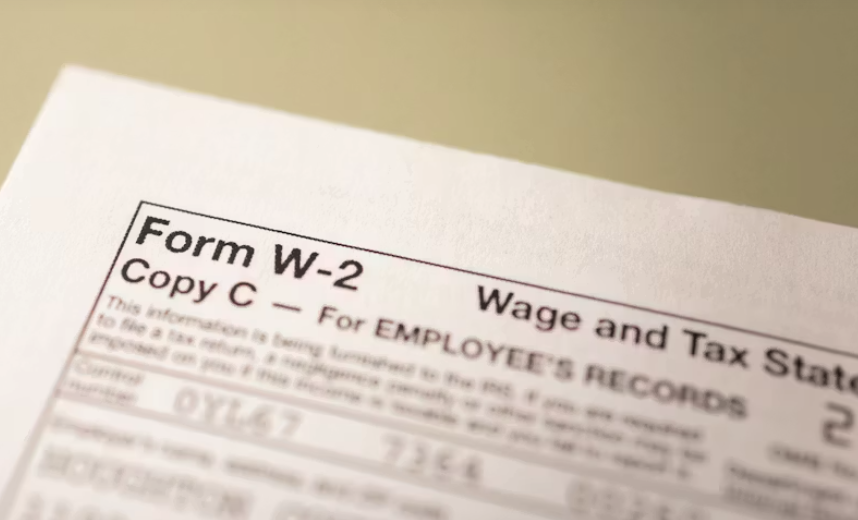
Every January, millions of Americans receive a small, dense form packed with numbers and codes that determine how their entire tax year shakes out. That form is the W-2, and if you’ve ever stared at it wondering what half those boxes mean, you’re not alone.
Your W-2 is arguably the single most important tax document you’ll handle each year. It tells the IRS exactly how much you earned, how much tax was withheld, and a whole lot more. Getting it wrong — or not understanding what’s on it — can lead to filing mistakes, missed refunds, or even an audit notice you definitely don’t want to deal with.
The good news? Once you understand the layout, a W-2 is actually pretty straightforward. In this guide, we’ll walk through every single box on the form, explain what each number means, flag the most common mistakes to watch for, and show you how your W-2 connects directly to your federal tax return.
Let’s break it down.
What Is a W-2 Form?
A W-2, officially called the “Wage and Tax Statement,” is a form your employer is legally required to send you by January 31 each year. It summarizes your total compensation and all the taxes withheld from your paychecks during the previous calendar year.
Your employer also sends copies to the Social Security Administration (SSA) and the IRS, so the government already knows what’s on your W-2 before you even file. That’s why accuracy matters — any mismatch between your W-2 and your tax return is a red flag.
Who Gets a W-2?
If you were a W-2 employee at any point during the year — meaning your employer withheld taxes from your paycheck — you’ll receive one. You’ll get a separate W-2 from each employer you worked for during the tax year.
If you were an independent contractor or freelancer, you won’t get a W-2. You’ll receive a 1099-NEC instead. (If you’re unsure about the difference, our post on understanding your tax forms breaks it all down.)
How Many Copies Do You Get?
Your W-2 comes in multiple copies:
- Copy A — Goes to the SSA (your employer sends this)
- Copy B — For you to file with your federal tax return
- Copy C — For your personal records
- Copy D — For your employer’s records
- Copy 1 — For your state or local tax filing (if applicable)
- Copy 2 — Additional state/local copy if needed
Most people only need to worry about Copies B and C, plus any state copies.
The Top Section: Identifying Information
Before we get into the numbered boxes, let’s cover the identifying information at the top of the form.
Box a: Employee’s Social Security Number
This is your SSN. Check it carefully. A wrong digit here can delay your refund or cause the IRS to reject your return entirely.
Box b: Employer Identification Number (EIN)
This is your employer’s tax ID number. You generally won’t need to do anything with this, but it’s used to match your W-2 to your employer’s tax filings.
Boxes c and d: Employer’s Name, Address, and Control Number
Box c shows your employer’s name and address. Box d is an internal control number your employer uses for their own records. You can usually ignore box d.
Boxes e and f: Employee’s Name and Address
This is your name and mailing address. Double-check the spelling of your name — it needs to match your Social Security card exactly. If your name is misspelled, contact your employer’s payroll department and request a corrected W-2 (called a W-2c).
Boxes 1 Through 6: The Big Numbers
These are the boxes that matter most for your federal tax return. Let’s go through each one.
Box 1: Wages, Tips, Other Compensation
This is the big one. Box 1 shows your total taxable wages, tips, and other compensation for the year. This is the number that flows directly onto your Form 1040.
Important: Box 1 is not necessarily your total gross pay. It’s your gross pay minus any pre-tax deductions. If you contribute to a traditional 401(k), a health savings account (HSA), or pay for health insurance premiums pre-tax, those amounts are subtracted before the number lands in Box 1.
For example, if your gross salary was $65,000 and you contributed $6,000 to your 401(k) and $2,000 to pre-tax health insurance, Box 1 would show $57,000.
Box 2: Federal Income Tax Withheld
This is the total amount of federal income tax your employer withheld from your paychecks throughout the year. This number goes directly onto your 1040 as a credit against your total tax liability.
If this number is too high, you’ll get a refund. If it’s too low, you’ll owe money when you file. If you consistently owe a lot or get a massive refund, it’s worth adjusting your W-4 withholding with your employer. (Check out our guide on how to fill out a W-4 for help with that.)
Box 3: Social Security Wages
This is the total amount of your earnings subject to Social Security tax. For 2025, the Social Security wage base was $168,600, meaning earnings above that amount aren’t subject to Social Security tax.
Box 3 is often different from Box 1 because some pre-tax deductions (like 401(k) contributions) reduce your taxable income for federal purposes but are still subject to Social Security tax.
Box 4: Social Security Tax Withheld
This is the total Social Security tax withheld from your pay. The rate is 6.2% of your Social Security wages (Box 3), up to the annual wage base. For 2025, the maximum Social Security tax withheld would be $10,453.20.
Quick check: Multiply Box 3 by 0.062. If the result doesn’t match Box 4 (within a few cents due to rounding), something may be off.
Box 5: Medicare Wages and Tips
This is the total amount of your earnings subject to Medicare tax. Unlike Social Security, there’s no wage cap for Medicare — all of your earnings are subject to it.
Box 5 is usually higher than Box 1 but may differ from Box 3 as well, depending on your specific pre-tax deductions.
Box 6: Medicare Tax Withheld
This is the total Medicare tax withheld. The standard Medicare tax rate is 1.45% of all wages. If you earned more than $200,000, you may also see the Additional Medicare Tax of 0.9% reflected here.
Quick check: Multiply Box 5 by 0.0145. If your wages were under $200,000, this should roughly match Box 6.
Boxes 7 Through 11: Tips, Benefits, and Special Items
Box 7: Social Security Tips
If you earned tips that are subject to Social Security tax, they show up here. For most people, this box is blank. Restaurant workers, bartenders, and others in tipped positions will see amounts here.
Box 3 + Box 7 should equal your total Social Security taxable earnings.
Box 8: Allocated Tips
This box is relatively rare. If your employer allocated tips to you (common in large food-service establishments where the IRS requires tip allocation), that amount appears here. Allocated tips are not included in Boxes 1, 3, 5, or 7 — you need to report them separately on your tax return.
Box 9: (Blank)
This box is intentionally left blank. It was previously used for a now-defunct advance Earned Income Credit payment. Ignore it.
Box 10: Dependent Care Benefits
If your employer offers a dependent care flexible spending account (FSA) or other dependent care benefits, the total amount appears here. Up to $5,000 is generally tax-free for married couples filing jointly. Any amount over the exclusion limit should already be included in Box 1 as taxable income.
You’ll need this number when filling out Form 2441 (Child and Dependent Care Expenses) with your tax return.
Box 11: Nonqualified Plans
This box shows distributions from nonqualified deferred compensation plans or nongovernmental Section 457(b) plans. For most employees, this box is blank. If there’s an amount here, it should also be included in Box 1.
Box 12: Coded Items (The Alphabet Soup Box)
Box 12 is where things get interesting. This box uses letter codes to report various types of compensation and benefits. There are four sub-boxes (12a through 12d), each with a code and a dollar amount.
Here are the most common codes you’ll encounter:
Code C: Taxable Cost of Group-Term Life Insurance Over $50,000
If your employer provides more than $50,000 in group-term life insurance, the cost of coverage above that threshold is taxable. That amount shows up here and is also included in Boxes 1, 3, and 5.
Code D: Elective Deferrals to a 401(k) Plan
This is your total traditional 401(k) contribution for the year. This amount was taken out of your paycheck pre-tax, which is why it reduces Box 1 but not Boxes 3 and 5.
Code DD: Cost of Employer-Sponsored Health Coverage
This shows the total cost of your employer-sponsored health insurance — both your share and your employer’s share. This is for informational purposes only and is not taxable. Don’t accidentally include this in your income.
Code E: Elective Deferrals to a 403(b) Plan
Similar to Code D but for 403(b) plans, which are common for teachers, nurses, and other public-sector or nonprofit employees.
Code G: Elective Deferrals to a 457(b) Plan
For governmental 457(b) plan contributions.
Code W: Employer Contributions to a Health Savings Account (HSA)
This includes both your pre-tax contributions and any employer contributions to your HSA. You’ll need this for Form 8889 when you file.
Code AA: Designated Roth Contributions to a 401(k)
If you made Roth 401(k) contributions, they show up here. Unlike traditional 401(k) contributions (Code D), Roth contributions are made with after-tax dollars, so they’re already included in Box 1.
Code BB: Designated Roth Contributions to a 403(b)
Same as Code AA, but for 403(b) plans.
Other Codes You Might See
- Code L — Substantiated employee business expense reimbursements
- Code M — Uncollected Social Security tax on group-term life insurance
- Code N — Uncollected Medicare tax on group-term life insurance
- Code P — Excludable moving expense reimbursements (for military only, post-2017)
- Code Q — Nontaxable combat pay
- Code R — Employer contributions to an Archer MSA
- Code S — Employee salary reduction contributions to a SIMPLE IRA
- Code T — Adoption benefits
- Code V — Income from exercising nonstatutory stock options
- Code Y — Deferrals under a Section 409A nonqualified deferred compensation plan
- Code Z — Income under a Section 409A nonqualified deferred compensation plan
Box 13: Checkboxes
Box 13 has three checkboxes:
Statutory Employee
If this box is checked, you’re classified as a statutory employee. This means you report your income and expenses on Schedule C rather than as regular wages. This is uncommon but applies to certain types of workers like full-time life insurance salespeople and certain traveling salespeople.
Retirement Plan
If checked, it means you were eligible to participate in your employer’s retirement plan (like a 401(k) or pension). This matters because it can affect your ability to deduct traditional IRA contributions. Even if you didn’t contribute, the box may still be checked if you were eligible.
Third-Party Sick Pay
This is checked if you received sick pay from a third-party insurer rather than directly from your employer. This mostly affects your employer’s records and usually doesn’t change how you file.
Box 14: Other
Box 14 is a catch-all box where employers can report additional information. There’s no standardized format, so what you see here varies widely. Common items include:
- State disability insurance (SDI) contributions
- Union dues
- Uniform payments
- Educational assistance
- Health insurance premiums (after-tax)
- Charitable contributions made through payroll
Some tax software will ask you to identify Box 14 items by category. If you’re unsure what a code means, check with your employer’s HR or payroll department.
Boxes 15 Through 20: State and Local Tax Information
Box 15: State and Employer’s State ID Number
This shows the two-letter abbreviation for your state and your employer’s state tax identification number.
If you worked in multiple states during the year, you may see two rows of state information on your W-2, or you may receive separate W-2s for each state.
Box 16: State Wages, Tips, Etc.
Your total wages subject to state income tax. This may differ from Box 1 because states have different rules about what’s taxable.
Box 17: State Income Tax
The total state income tax withheld from your paychecks. This amount goes on your state tax return.
Box 18: Local Wages, Tips, Etc.
If you worked in a city or county that levies a local income tax (common in states like Ohio, Pennsylvania, and New York), your local taxable wages appear here.
Box 19: Local Income Tax
The total local income tax withheld.
Box 20: Locality Name
The name of the city, county, or school district that the local tax in Box 19 applies to.
Common W-2 Mistakes to Watch For
Now that you know what every box means, here’s what to check before you file.
1. Wrong Social Security Number
This is the most critical error. A single wrong digit can cause the IRS to reject your return or delay your refund by months. Compare Box a to your Social Security card.
2. Misspelled Name
Your name on the W-2 must match your Social Security card exactly. If you recently married, divorced, or legally changed your name, make sure both your W-2 and your SSA records are updated.
3. Incorrect Wages
Compare Box 1 to your final pay stub of the year. After accounting for pre-tax deductions, the numbers should align. If they don’t, contact payroll immediately.
4. Missing or Wrong Box 12 Codes
If you know you contributed to a 401(k) but don’t see Code D in Box 12, that’s a problem. Same goes for HSA contributions (Code W) or Roth 401(k) contributions (Code AA).
5. The Retirement Plan Box Is Checked When It Shouldn’t Be
If you weren’t eligible for a retirement plan but Box 13 shows the retirement plan checkbox marked, this could incorrectly limit your IRA deduction. Get it corrected.
6. Math Errors on Social Security and Medicare
Use the quick checks we mentioned above. Box 4 should be 6.2% of Box 3, and Box 6 should be 1.45% of Box 5 (for earners under $200,000). If the math doesn’t add up, ask your employer to review.
7. You Received a W-2 from a Company You Don’t Recognize
This could be a sign of identity theft. If someone used your SSN to get a job, their employer may have issued a W-2 in your name. Report this to the IRS immediately.
What to Do If Your W-2 Is Wrong
If you spot an error, here’s the process:
- Contact your employer’s payroll department as soon as possible. Explain the specific error.
- Request a corrected W-2 (Form W-2c). Your employer is required to issue one if there’s a legitimate error.
- Don’t file your return until you receive the corrected form, if possible. Filing with incorrect information creates headaches down the road.
- If your employer refuses to correct the error, you can contact the IRS at 800-829-1040 for assistance. You may need to file Form 4852 (Substitute for Form W-2) using your pay stubs to estimate the correct amounts.
If you haven’t received your W-2 by mid-February, reach out to your employer first. If you still don’t have it by the end of February, contact the IRS.
How Your W-2 Connects to Your Tax Return
Understanding how W-2 numbers flow onto your Form 1040 makes the whole filing process click.
Box 1 Goes to Line 1 of Form 1040
Your total wages from all W-2s get added together and reported on Line 1 of your 1040. If you have multiple W-2s, add up all the Box 1 amounts.
Box 2 Goes to Line 25a of Form 1040
Your total federal tax withheld from all W-2s is reported on Line 25a. This is the number that gets compared against your total tax liability to determine whether you get a refund or owe money.
Boxes 3 Through 6 Feed into the Background
You generally don’t enter these directly on your 1040, but the IRS uses them to verify your Social Security and Medicare tax calculations. Your tax software handles this automatically.
Box 12 Feeds Into Various Forms
- Code D/E/G amounts may affect your retirement contribution limits
- Code W feeds into Form 8889 for HSA reporting
- Code DD is informational only
Boxes 17 and 19 Go to Your State and Local Returns
Your state income tax withheld (Box 17) goes on your state return and may also be deductible on your federal return if you itemize deductions (subject to the $10,000 SALT cap).
W-2 vs. Your Last Pay Stub: Why They Might Differ
A common source of confusion is when your W-2 doesn’t match your last pay stub of the year. Here are some reasons for the discrepancy:
- Year-end adjustments — Your employer may have made corrections after your last paycheck.
- Fringe benefits — Taxable benefits like group-term life insurance over $50,000 may be added.
- Timing of deductions — Some deductions are calculated annually, not per pay period.
- Bonus or commission timing — Payments processed in the last days of December might not appear on your last regular pay stub.
When in doubt, your W-2 is the authoritative document for tax filing purposes.
How to Keep Your W-2 Records
The IRS recommends keeping copies of your tax returns and supporting documents (including W-2s) for at least three years from the date you filed. If you underreported income by more than 25%, keep them for six years. And if you never filed or filed a fraudulent return, keep them indefinitely.
A good practice is to scan your W-2s and store digital copies in a secure location, in addition to keeping the paper originals. If you ever need to apply for a mortgage, student loan, or other financial product, having past W-2s readily available makes life much easier.
If you’re building a solid personal filing system for your finances, your W-2s should be one of the first documents you organize each year.
Freelancers and Side Hustlers: A Quick Note
If you have both W-2 employment and side income, you’ll use your W-2 for your employment wages and a 1099-NEC (or other 1099 forms) for your self-employment income. Both get reported on the same tax return, but on different lines and schedules.
Your W-2 income goes on Line 1 of your 1040, while self-employment income goes on Schedule C and then flows to Schedule SE for self-employment tax. If you’re juggling multiple income sources, our guide on managing taxes with a side hustle has more details on how it all fits together.
The Bottom Line
Your W-2 might look intimidating, but it’s really just a structured summary of your work year in numbers. Here’s what to remember:
- Box 1 is your taxable wages — the most important number for your federal return.
- Box 2 is your federal tax withheld — this determines whether you get a refund or owe.
- Box 12 codes tell the story of your benefits, retirement contributions, and more.
- Always verify your personal information (SSN, name spelling) before filing.
- Do the math checks on Social Security and Medicare taxes.
- Request a W-2c immediately if you spot errors — don’t file with incorrect information.
Once you understand the layout, reading your W-2 takes five minutes. And those five minutes can save you from filing errors, missed deductions, and unnecessary stress during tax season. Take the time to review your W-2 carefully each year — your future self (and your refund) will thank you.