By
By 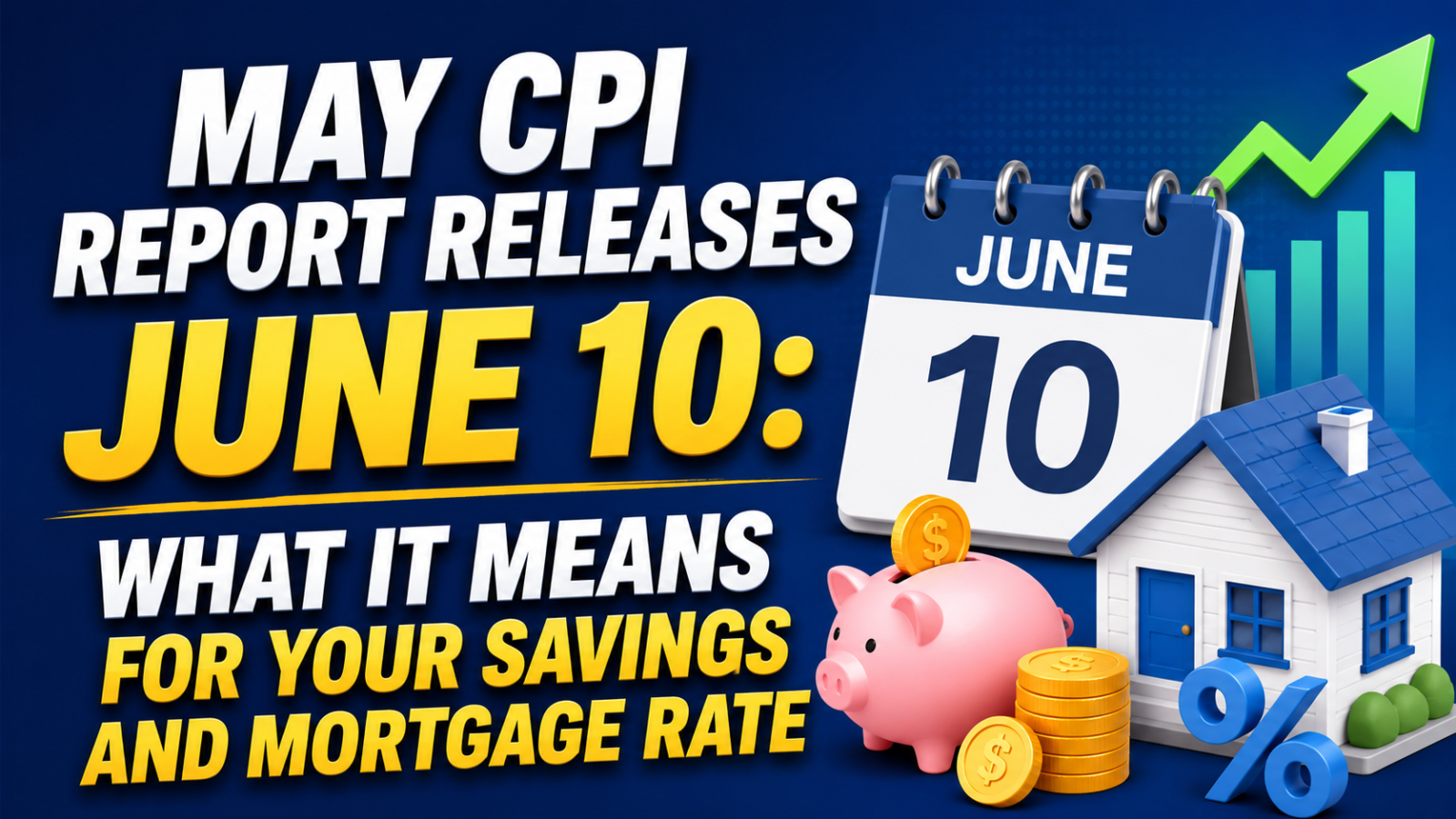
The Bureau of Labor Statistics releases the Consumer Price Index report for May 2026 on June 10. This single report will determine whether the Federal Reserve cuts rates at its June 16-17 FOMC meeting — Kevin Warsh’s first as Fed chair — or holds for another month. For anyone with a savings account, a mortgage, a CD, or credit card debt, the May CPI number matters directly. Here is what to watch and what to do depending on what the data shows.
Where Inflation Stands Right Now
April 2026 CPI came in at 3.8% year-over-year, driven primarily by energy price surges from Middle East conflict disrupting oil supplies through the Strait of Hormuz. This was the third consecutive month of elevated readings. Kiplinger and other forecasters project May could show inflation above 4% — which would mark the highest reading since late 2023.
Core CPI (which strips out food and energy to show underlying inflation trends) has been running slightly lower, around 3.2% to 3.5%, suggesting the spike is largely energy-driven rather than broad-based. But headline CPI above 4% would almost certainly push the Fed to hold rates at the June meeting.
Why This Report Matters More Than Usual
Two reasons June 10 is more important than a typical CPI release:
It is Kevin Warsh’s first test. Warsh was confirmed as Fed chair just weeks ago. His first FOMC meeting is June 16-17, six days after the CPI release. A hot inflation print gives him political cover to hold rates and establish himself as serious about price stability — which aligns with his known policy views. A cool print opens the door to a rate cut at his first meeting, which would be a more dovish signal than markets expect.
It sets the tone for the rest of 2026. Markets are currently pricing a 97.5% probability of no rate change in June. If May CPI comes in significantly above 4%, that probability holds and the next potential cut moves to September. If May CPI surprises to the downside — say, 3.0% or below — rate cut expectations could accelerate dramatically, moving CD rates, HYSA rates, and mortgage rates almost immediately.
Scenario 1: May CPI Above 4% (Most Expected)
What happens: Fed holds rates June 16-17. HYSA rates stay near current 4.20%-4.75% APY. Mortgage rates remain around 6%. Next rate cut shifts to September at earliest.
What to do:
- Lock in a 6-month or 12-month CD before rates potentially fall later in 2026 — this scenario means you have more time, but the window still closes eventually
- Hold off on major variable-rate borrowing (HELOC, adjustable mortgage) — rates staying elevated means variable products stay expensive
- Continue enjoying high HYSA rates on emergency fund and short-term savings
Scenario 2: May CPI 3.0% or Below (Surprise Drop)
What happens: Fed may cut rates June 16-17 or strongly signal a cut in July. HYSA rates begin dropping within 1-2 weeks of a cut. CD rates start declining in anticipation. Mortgage rates could fall toward 5.5% over summer.
What to do:
- Lock in a 12-month CD immediately — this is the last chance to capture 4%+ rates before they fall
- If refinancing a mortgage has been on your mind, start the process — rates dropping toward 5.5% could save $200-$400/month on a $400K loan
- Pay down variable-rate debt aggressively now — any rate relief coming is modest and gradual
Scenario 3: May CPI 3.5%-3.9% (In-Line)
What happens: Fed holds in June, signals potential September cut. Markets largely unchanged. No immediate action needed beyond current strategy.
How to Watch the Report
The BLS releases the CPI report at 8:30 AM Eastern on June 10. The headline number (all items) and core number (excluding food and energy) are both reported. What to watch specifically:
- Headline CPI year-over-year: The number most quoted in news coverage
- Core CPI year-over-year: What the Fed actually focuses on for policy decisions
- Month-over-month change: Whether prices rose or fell from April to May
- Energy component: If it spiked, the headline number is probably energy-driven rather than broad-based — less concerning for the Fed
- Shelter (housing): Rent and owners’ equivalent rent make up about 35% of CPI; if this is cooling, core inflation is genuinely improving
The full report is published at bls.gov/cpi. Most financial news sites publish the headline numbers within minutes of release.
The FOMC Meeting Six Days Later
The June 16-17 Fed meeting will incorporate the May CPI data along with the May jobs report (releasing June 5) in its decision. Warsh’s press conference after the rate decision — expected around 2:30 PM ET on June 17 — will be the most important signal for the rest of 2026. Watch specifically for:
- Whether he frames inflation as “transitory” (energy-driven) or “persistent” (broad-based)
- His language on future rate cuts — “data dependent” is neutral; “not yet appropriate” is hawkish
- Whether he mentions two or zero cuts in his 2026 outlook
The HYSA and CD rates you see in July will largely reflect whatever Warsh signals on June 17.
Sources: BLS CPI April 2026; Polymarket FOMC odds May 2026; Kiplinger economic outlook; Federal Reserve FOMC schedule. This article is for informational purposes only.